
Why Manifestation Confuses So Many
Search ‘manifestation‘ online and you’ll see everything from TikTok videos promising dream cars in a week to gurus saying you just need to ‘think positive.’ And maybe you’ve tried it, writing affirmations, cutting out vision boards, meditating on a dream life. Yet nothing seemed to change.
Here’s the truth: most people get manifestation wrong. They treat it like magic instead of what it truly is — a powerful blend of psychology, neuroscience, and consistent daily habits. This article will explain what is manifestation, what it really means, where it came from, why people fail, and how to practice what is manifestation in a way that actually works.
The Dreamer, the Builder, and the Skeptic

Meet Alex. He dreams of wealth. He writes down ‘I am wealthy’ 50 times a day and fills a Pinterest board with luxury cars and vacations. But he keeps overspending, never saves, and avoids learning about money. A year later, he’s no closer to financial freedom.
Now meet Jamie. She sets a goal: ‘Save $100 each month.’ She builds a tracker, makes small sacrifices, and starts a side hustle. A year later, she has $1,200 saved and a new sense of discipline. She’s building real momentum.
Finally, meet Maria. She laughed at manifestation until she tried it in a small way. She committed to walk 15 minutes a day and told herself, ‘I am someone who honors my body.’ Six months later, she lost weight, had more energy, and inspired friends. She realized manifestation is about identity and habits, not magic.
These stories show the difference: Alex dreams, Jamie builds, Maria transforms. That’s manifestation at work. Understanding what is manifestation is crucial for anyone looking to make significant changes in their life.
The History and Evolution of Manifestation
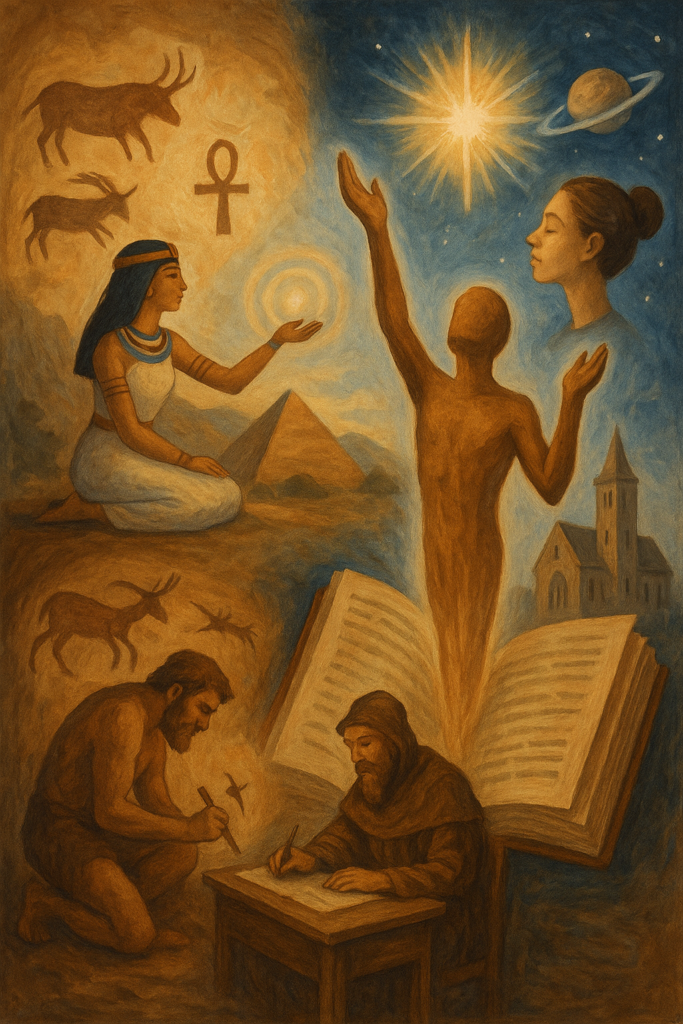
To truly grasp what is manifestation, one must consider its historical context and the evolution of thought surrounding this concept.
To grasp the concept of what is manifestation, we must delve into its historical origins and how thoughts have shaped its understanding.
Manifestation isn’t new. Ancient philosophies and spiritual traditions carried similar ideas:
– Stoics taught that perception shapes experience.
– Hinduism and Buddhism emphasized thought, intention, and karma.
– In the 19th century, the New Thought movement in the U.S. popularized ‘thoughts become things.’
In the modern era, psychology and neuroscience provide evidence. Books like The Power of Positive Thinking (1952), Psycho-Cybernetics (1960), and Atomic Habits (2018) show how belief, self-image, and habits drive reality. Manifestation today blends ancient wisdom with modern science.
Understanding what is manifestation can help clarify misconceptions and guide you through the process of effectively using it.
The Science Behind Manifestation
- Reticular Activating System (RAS): This brain filter highlights what matters to you. Set a goal, and suddenly opportunities appear.
- Neuroplasticity: Repeated thoughts and habits rewire the brain. Practice builds identity.
- Self-Image Theory: Maxwell Maltz compared the subconscious to a thermostat — you rise or fall to the level of your self-belief.
- Cognitive Dissonance: Misaligned beliefs and actions create tension until one change. Habits close the gap.
- The Placebo Effect: Belief alone can cause physical changes. Belief plus action creates transformation.
- Habit Loop (Cue–Routine–Reward): Duhigg’s model shows how small routines lock in identity. Manifestation leverages this.
Why Habits Are the Missing Link
Visualization is powerful, but habits make it real. Habits are daily evidence to your subconscious: ‘This is who I am now.’ Small consistent behaviors compound into identity. Over time, that identity manifests results.
Why Most People Fail at Manifestation
What is manifestation if not the bridge between our desires and the consistent actions we take toward achieving them?
Common mistakes include:
1. Skipping the identity shift (dreaming of wealth while believing ‘I’m broke’).
2. Expecting instant results instead of compounding consistency.
3. Stopping at vision boards with no aligned action.
4. Chasing too many goals and scattering focus.
A key aspect of what is manifestation involves understanding how our beliefs influence our actions and outcomes.
Many people wonder what is manifestation and how they can harness its potential to create their desired reality.
The key to understanding what is manifestation lies in recognizing the power of our thoughts and beliefs.
The 5-Step System to Manifest Effectively
When considering what is manifestation, it’s vital to reflect on personal identity and how it aligns with your aspirations.
To truly engage with what is manifestation, one must also embrace the daily habits that reinforce their goals.
Asking what is manifestation brings attention to the interplay between intention and consistent effort.
When we talk about what is manifestation, it’s crucial to recognize that habits play a pivotal role in its successful application.
What is manifestation is not merely a question but a framework for understanding our proactive role in our reality.
Each day, we engage in what is manifestation through our actions, thoughts, and attitudes.
Many people misunderstand what is manifestation, thinking it’s simply about wishing for things rather than actively changing their mindset and habits.
Grasping what is manifestation can transform your approach to achieving your goals.
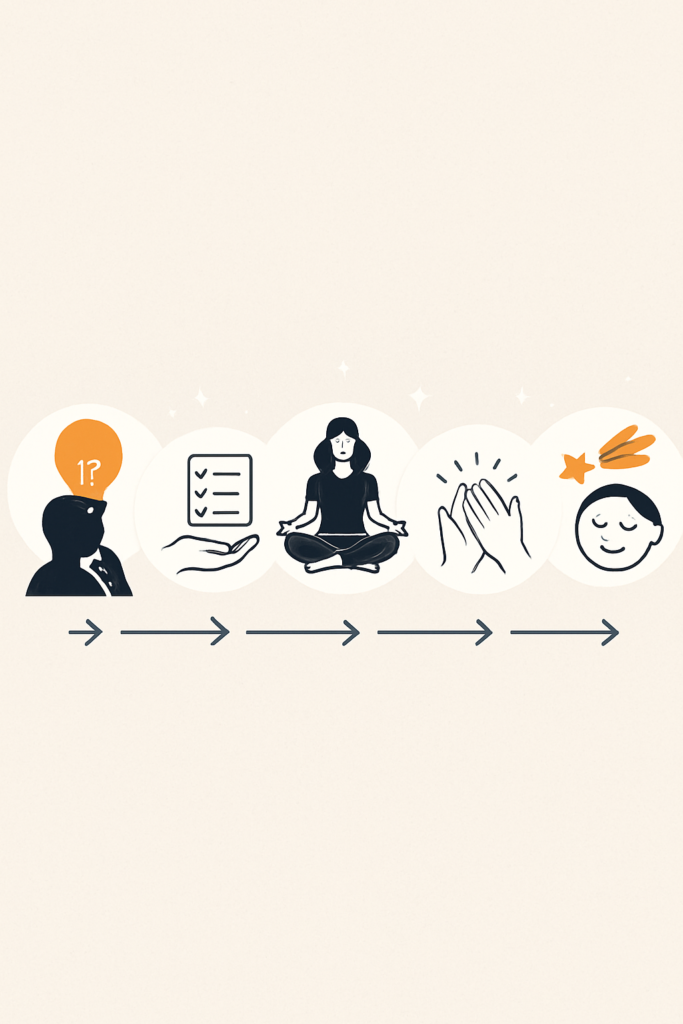
1. Get Clear: Define a measurable goal. Example: ‘Earn an additional $400/month by Dec 2025.’
By defining what is manifestation clearly, you set the stage for your journey toward a more intentional life.
To understand what is manifestation, it’s helpful to reflect on your own identity and how it aligns with your goals.
Taking a moment to think about what is manifestation can reveal the key to unlocking your potential.
2. Reframe Identity: Say ‘I am the kind of person who…’ Example: ‘I am someone who takes care of my health.’
Therefore, understanding what is manifestation is a step towards realizing our fullest potential.
Every aspect of what is manifestation hinges on consistent action and a clear vision for what you desire.
To explore what is manifestation is to open the door to new possibilities in life.
Ultimately, what is manifestation is about creating a life that reflects your highest aspirations.
3. Anchor Habits: Start with one daily action that proves your identity. Money → Track spending. Health → Drink water. Confidence → Speak once in meetings.
4. Visualize + Act: Spend 2 minutes visualizing. Then immediately take one real action to reinforce it.
In essence, what is manifestation combines intention, belief, and action into a cohesive process for change.
Reflecting on what is manifestation can lead to profound insights about your heart’s desires.
5. Track Progress: Use a journal or app. Every checkmark reinforces the new identity and builds momentum.
Journaling Prompts & 7-Day Challenge
Considering what is manifestation can enhance your understanding of your motivations and desires.
Journaling Prompts:
– What’s my most important goal?
– Who is the version of me that already has it?
– What one action today proves I’m that person?
7-Day Manifestation Challenge:
Day 1: Write your goal.
Day 2: Reframe identity.
Day 3: Choose habit.
Day 4: Visualize + act.
Day 5: Track.
Day 6: Share.
Day 7: Reflect.
FAQs About Manifestation
Q: Can I manifest love?
A: Yes — by becoming the person ready for a healthy relationship.
Q: Can I manifest health?
A: Yes — pair visualization with healthy habits.
Q: Can I manifest money or career success?
A: Yes — clarity, identity, and habits drive results.
Q: Do negative thoughts manifest bad outcomes?
A: Persistent negativity can influence behavior and outcomes.
Q: Is manifestation instant?
A: No. It compounds over time.
Q: Is it compatible with religion?
A: Many see it as aligned with prayer and faith in action.
Q: How fast can results come?
A: It varies — consistency matters more than speed.
Q: Isn’t it just luck?
A: No — belief plus habits prepare you to seize opportunities.
Q: Can science explain manifestation?
A: Yes — psychology and neuroscience offer strong evidence.
Q: What’s the biggest mistake?
A: Thinking about it without acting.
Worksheet: Apply Manifestation Today
When you explore what is manifestation, you begin to shift your perspective on how to achieve your dreams.
In conclusion, understanding what is manifestation is about recognizing your power to shape your reality.
1. My goal is: ____________
2. The identity of the person who has it is: ____________
3. One habit that proves I’m that person: ____________
4. One action I’ll take today: ____________
5. I’ll track progress using: ____________
Asking yourself what is manifestation repeatedly can lead to profound insights about your goals and desires.
Bringing It All Together
To truly understand what is manifestation, look beyond quick fixes and embrace the process of growth.
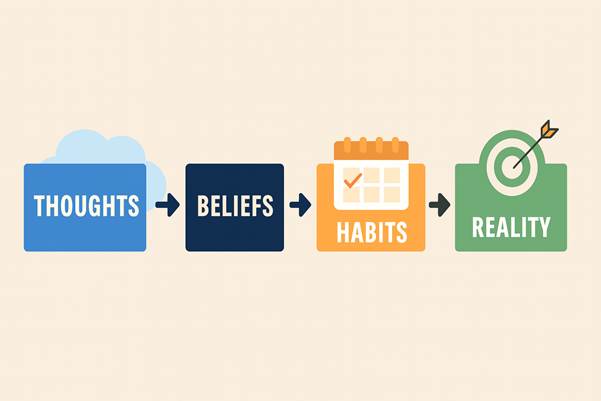
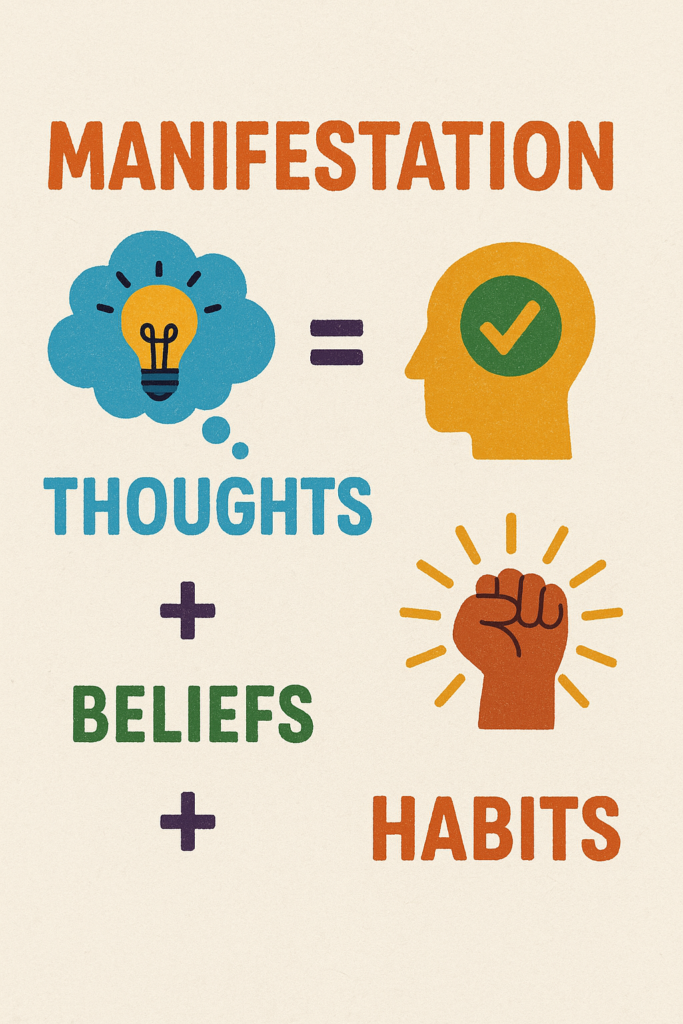
Manifestation = Thoughts + Beliefs + Habits.
Thoughts set vision. Beliefs shape identity. Habits build the bridge. When aligned, manifestation is not luck — it’s inevitable.
Each time you think about what is manifestation, consider how it relates to your everyday actions and mindset.
Reflecting on what is manifestation can help clarify your intentions and enhance your focus.
Conclusion: Manifestation Made Real
Manifestation isn’t magic. It’s psychology, belief, and consistent habits. Stop treating it as wishful thinking. Start treating it as identity-building.
Reflect now:
– What’s one area of your life to change?
– Who is the person already living that life?
– What action today proves you’re becoming them?
Write it. Do it. That’s manifestation in motion.
The future you desire is the future you practice daily.
Extended Stories: Manifestation in Daily Life
Alex’s story could be anyone’s. He had ambition but lacked alignment. To bring his vision to life, we imagine his daily routines: he skipped budgeting apps, avoided looking at his bank balance, and joked about being ‘bad with money.’ These daily reinforcements cemented his old identity.
Jamie, however, embraced proof-based manifestation. She visualized a better financial future, yes—but more importantly, she aligned her daily actions. She said no to instant gratification, said yes to small but consistent saving, and built an identity as a responsible wealth builder. Her results weren’t luck; they were the natural consequence of aligned identity and behavior.
As you journey through life, always remember what is manifestation and its role in shaping your reality.
Maria’s transformation extended beyond her health. As she lost weight and gained confidence, she started applying manifestation to other areas of life: career goals, relationships, and self-esteem. She discovered that manifestation was not one big change but a ripple effect. Once identity shifted, everything else began to follow.
When you understand what is manifestation, you gain invaluable insights to propel your journey forward.
The Historical Roots of Manifestation
Manifestation may feel like a modern self-help buzzword, but its roots trace back thousands of years. Ancient Stoics believed perception shapes reality. Epictetus wrote that people are disturbed not by things, but by the views they take of them.
Buddhism emphasizes the law of cause and effect, karma, and the role of intention. Hinduism explores Sankalpa, the resolve or intention set before meditation, which parallels modern affirmations.
Embracing what is manifestation requires commitment, patience, and a willingness to grow.
In the 19th century, the New Thought movement in the U.S. made ‘thoughts become things’ a household idea. Later, works like Norman Vincent Peale’s The Power of Positive Thinking and Maxwell Maltz’s Psycho-Cybernetics framed manifestation through psychology. Today, James Clear’s Atomic Habits and Carol Dweck’s Mindset continue this legacy in science-based language.
Deeper Science of Manifestation
What is manifestation serves as a reminder that every thought and action contributes to your reality.
Confirmation Bias: Once you adopt a belief about yourself, your brain scans for evidence that supports it. Think you’re unlucky? You’ll notice missteps. Reframe as ‘I am resourceful,’ and you’ll spot opportunities instead.
Implementation Intentions: Research shows that ‘If-then’ planning doubles or triples habit success. Example: ‘If it is 8am, then I drink a glass of water.’ Manifestation gains power when paired with these micro-commitments.
Growth Mindset: Carol Dweck’s research revealed that those who believe abilities can grow tend to persevere longer. Manifestation thrives when paired with growth mindset—it becomes less about magic and more about compounding practice.
As you delve into what is manifestation, consider how your mindset shapes your journey.
Behavioral Momentum: Just as physics tells us objects in motion stay in motion, habits do the same. Start small, stay consistent, and momentum carries you further than motivation ever could.
Obstacles & Troubleshooting
Ultimately, what is manifestation is a way of life that encourages growth and self-discovery.
| Problem | Solution |
| Motivation fades | Replace motivation with systems. Build triggers, reminders, and accountability |
| Impatience | Expect progress to unfold over 90-day cycles. Manifestation isn’t overnight—it’s layered. |
| Doubt | Collect micro-proof. Write down three small wins daily to reinforce identity. |
| Setbacks | Use the Two-Day Rule. Never miss twice. One miss is data; two becomes a pattern. |
| Overwhelm | Shrink goals into bite-sized experiments. Instead of ‘I’ll exercise daily,’ say, ‘I’ll put on my running shoes after coffee. |
Finally, what is manifestation involves letting go of limiting beliefs and stepping into your power.
As you navigate through life, keep asking yourself what is manifestation and how it shapes your journey.
Journaling Prompts & 7-Day Challenge (Expanded)
So, every time you ask what is manifestation, remember that it’s about aligning with your true self.
Journaling Prompts:
– What is my most urgent goal right now?
– Who is the person I need to become to achieve it?
– What habits prove I am becoming this person?
– What limiting beliefs am I releasing today?
– How will I celebrate progress, no matter how small?
7-Day Challenge (Detailed Walkthrough)
Day 1: Write your big goal and identity statement.
Day 2: Identify one daily habit that proves the new identity.
Day 3: Create an If-Then plan for that habit.
Day 4: Visualize yourself succeeding, then take one action.
Day 5: Track your action in writing or an app.
Day 6: Share your identity shift with someone you trust.
Day 7: Reflect on the week, identify proof points, and set a new micro-goal.
Extended FAQs About Manifestation
Q: Can I manifest love?
A: Yes, by becoming the kind of person ready for a healthy relationship. Focus on self-worth, boundaries, and openness.
What is manifestation is more than just a question; it’s a catalyst for change.
Q: Can I manifest health?
A: Visualization paired with consistent habits improves recovery and wellness. Athletes use this daily.
Q: Can I manifest money or career success?
A: Yes, by aligning identity and action. Become the person who delivers value, then opportunities follow.
By continually asking what is manifestation, you remain focused on your transformative journey.
Q: Do negative thoughts manifest bad outcomes?
A: Persistent negativity creates self-sabotage. Balance mindset with proactive habits.
Q: Is manifestation instant?
A: Rarely. It compounds, like interest, over time.
Q: Is it compatible with religion?
A: Many see it as aligned with prayer, intention, and faith in action.
Q: How fast can results come?
A: Varies. Focus on consistency over speed.
Q: Isn’t it just luck?
A: No. Manifestation is about preparation meeting opportunity.
Q: What’s the biggest mistake?
A: Expecting results without changing identity or habits.
Q: What if my environment works against me?
A: Shape micro-environments. Small changes—like removing distractions or joining a supportive community—make big differences.
Final Word: Make Manifestation Real
Manifestation isn’t fantasy—it’s identity plus science plus action. You do not need to wait for a miracle. You only need to decide who you are becoming, and prove it daily.
Every checkmark in your journal, every dollar saved, every workout logged is a vote for your new self. Momentum compounds until others call it luck. You’ll know it was alignment.
Ultimately, what is manifestation represents a unique intersection of identity and action.
Remember: You are always manifesting. The only question is whether you are manifesting by default, or with intention. Choose identity. Choose action. That’s manifestation, made real.
Metrics & Tracking Your Manifestation Progress
Inputs (habits you control): days you journaled, glasses of water you drank, workouts completed, dollars saved, outreach emails sent.
Leading indicators (early wins): improved mood, increased energy, number of opportunities noticed, supportive conversations, reduced procrastination.
Lagging indicators (results): income growth, career advancement, weight loss or gain, improved relationships, greater resilience.
These results take time, but tracking them monthly allows you to see long-term patterns that daily focus might miss.
More Case Studies
Case 1 — The Entrepreneur: Sam built a small side business while working full-time. He framed his identity as ‘I am someone who creates value consistently.’ He built a habit of one outreach email per day and one product improvement per week. Within six months, his side income reached $1,200/month.
Case 2 — The Recovering Procrastinator: Lina had struggled for years to finish personal projects. She adopted the identity ‘I start before I’m ready.’ Her habit was the five-minute rule: she committed to work for five minutes, knowing momentum would carry her further. Within three months, she completed her first digital product.
Case 3 — The Athlete: Maria, a local runner, visualized her races and paired that with a structured training plan. She tracked her workouts, reframed herself as ‘a disciplined athlete,’ and shaved three minutes off her 10k time in just 90 days.
Ethical Manifestation & Boundaries
Healthy manifestation respects boundaries and free will. You cannot manifest control over other people’s choices. Instead, you align your own energy, actions, and identity so you attract opportunities and relationships that match who you’ve become.
This means focusing on becoming the best version of yourself, rather than forcing outcomes. True manifestation is about congruence and alignment—not manipulation. Ethical manifestation builds trust, peace, and sustainability.
12 Micro-Experiments to Try This Month
1. $5 no-spend weekday; log cravings and impulses.
2. Two-minute meditation before opening your email.
3. Send one thank-you message daily.
4. Replace one scroll session with a 10-minute walk.
5. Write your identity statement on a sticky note and place it on your laptop.
6. Track your sleep for seven nights; adjust one factor.
7. Ask one clarifying question in every meeting.
8. Eat one high-protein breakfast on workdays.
9. Read two pages of a skills book nightly.
10. Create an If-Then plan for your hardest habit.
11. Invest $10 in something that improves your future self.
12. Do a Sunday reset: list three priorities and three habits for the week ahead.
Leave a Reply