Why Breaking Bad Habits Feels Hard (and How Visualization Helps)
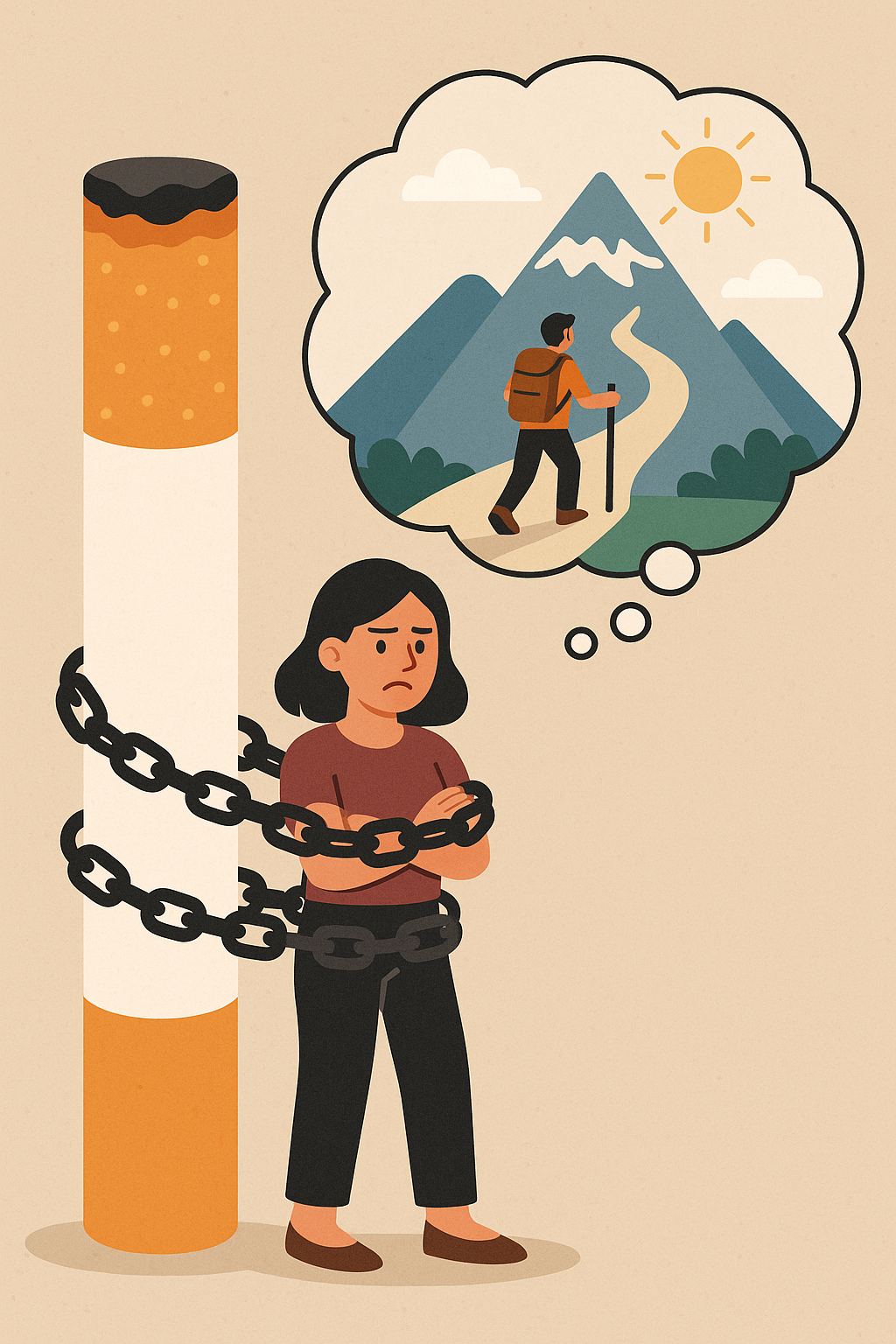
Breaking bad habits with positive visualization offers a practical way to work with the brain rather than against it. Breaking a bad habit often feels like pushing against a brick wall because repeated behaviors form strong neural pathways that prioritize efficiency and familiarity. Once a habit becomes automatic, willpower alone is rarely enough to stop it—the brain has already learned the pattern and defaults to it under stress or distraction. Visualization helps interrupt this loop by mentally rehearsing a different response, allowing the brain to experience an alternative behavior before it happens in real life. Over time, this mental practice weakens the old pattern and strengthens new, healthier pathways, making change feel more natural and achievable.
Positive visualization works by giving your brain a clear new target to move toward rather than focusing on what you’re trying to stop. Through positive visualization techniques, you mentally picture yourself responding differently in situations where the old habit once took over. When you imagine this new behavior in detail, you activate the same neural circuits that would fire if you were actually performing the action, which helps the brain treat the change as familiar rather than threatening.
A simple positive visualization exercise might involve closing your eyes and vividly rehearsing a specific moment—seeing yourself pause, choose a healthier response, and feel calm or confident afterward. Over time, these rehearsals reduce resistance and weaken the automatic pull of the old habit. Many positive visualization examples show that when imagery is specific and emotionally engaging, the brain becomes more receptive to change. Instead of forcing yourself to quit a behavior through sheer willpower, visualization gently guides your mind toward the identity and actions you want to embody, making lasting change feel more natural and achievable.
How Positive Visualization Rewires the Brain
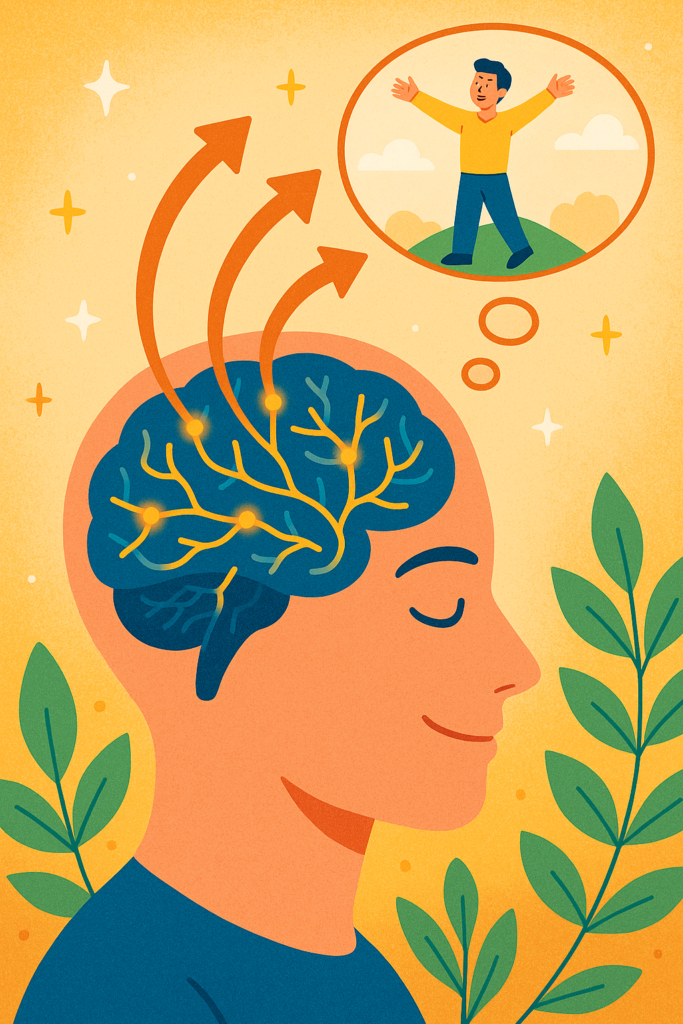
Visualization isn’t just imagination—it’s a measurable neurological process that directly influences behavior. Research shows that the brain cannot fully distinguish between a vividly imagined scenario and a real one, which is why positive visualization techniques are so effective for habit change. When you repeatedly picture yourself choosing a healthier response, your brain begins to treat that response as familiar and preferable. This makes breaking bad habits with positive visualization more sustainable, because the mind starts anticipating the new behavior instead of defaulting to the old pattern.
A focused positive visualization exercise allows you to mentally rehearse specific moments where temptation or triggers usually appear. By seeing yourself pause, make a different choice, and experience a positive outcome, you strengthen alternative neural pathways while weakening the old habit loop. Many positive visualization examples demonstrate that consistency matters more than intensity—short, repeated mental rehearsals gradually rewire perception, reduce emotional resistance, and change how challenges and decisions are processed over time.
The Habit Loop and How Visualization Interrupts It
All habits follow a predictable sequence: cue, routine, and reward. The problem is that once this loop is set, your brain runs it automatically. Using positive visualization allows you to anticipate cues and mentally rehearse choosing a different routine. This weakens the link between the cue and the unwanted behavior.
Visualization also enhances the reward stage. When you imagine the feeling of pride, relief, or accomplishment that comes from breaking a habit, your brain begins associating positivity with the new behavior instead of the old one.
Why Positive Visualization Supports Emotional Regulation

Many bad habits are triggered by emotional discomfort—stress eating, endless scrolling, procrastination, or reacting impulsively in tense situations. Positive visualization techniques work well for breaking these patterns because they help calm the brain’s stress response before it escalates. When you mentally picture yourself responding with patience, clarity, or restraint, your nervous system begins to associate those situations with safety rather than threat. This reduces reactivity and creates space for conscious choice instead of automatic behavior.
A simple positive visualization exercise involves imagining a familiar trigger and then vividly rehearsing a calm, intentional response, including how your body feels afterward. Over time, this practice strengthens the prefrontal cortex, the part of the brain responsible for self-control and decision-making, while quieting the emotional centers that drive impulsive habits. Many positive visualization examples show that this mental buffering effect makes it easier to pause, regulate emotion, and choose a healthier response in real time, even during moments of stress.
Examples of Breaking Bad Habits with Visualization
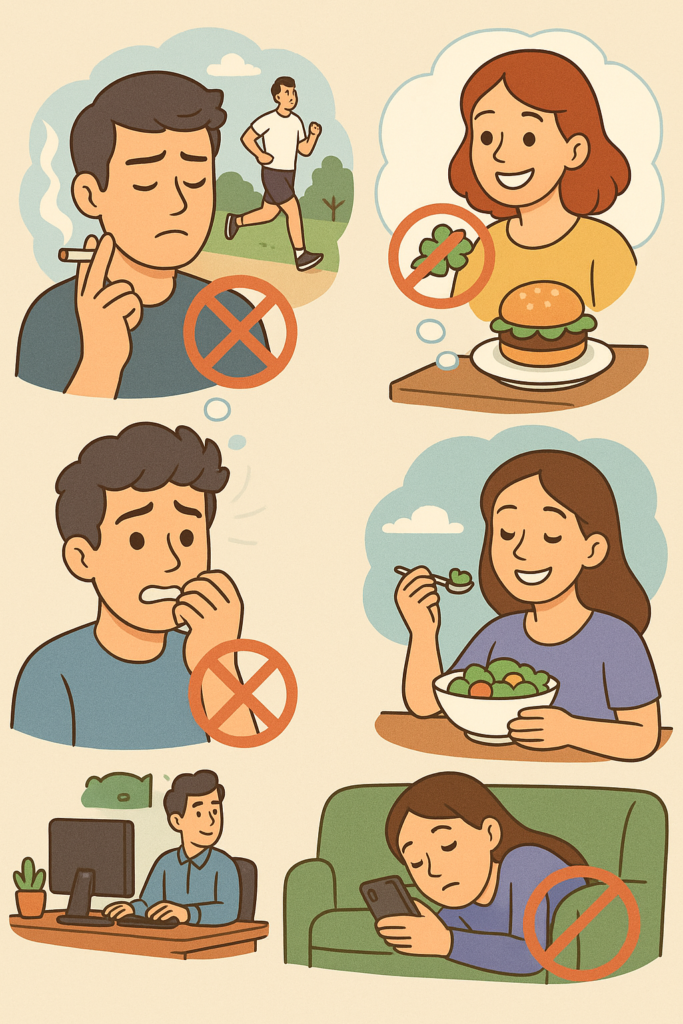
Imagine someone who struggles with nighttime snacking. Instead of relying on willpower in the moment, they take a few minutes each morning to mentally rehearse a different routine—closing the kitchen, pouring a glass of water, and settling into the evening feeling calm and satisfied. By repeatedly visualizing this sequence, the brain begins to recognize it as the expected behavior. When the real situation arises, the response feels familiar rather than forced, making it easier to follow through without internal conflict.
The same approach can be applied to procrastination. Rather than focusing on the pressure of an entire task, a person might imagine themselves opening their laptop, completing just the first small step, and then experiencing a sense of ease and accomplishment. This mental rehearsal reduces anxiety and lowers the barrier to starting. Over time, these imagined experiences reshape how the brain anticipates challenges, replacing avoidance with confidence and turning once-difficult behaviors into manageable, almost automatic actions.
Common Mistakes People Make When Using Visualization
One common mistake is being too vague. If your visualization doesn’t include sensory detail, the brain treats it like background noise. Breaking bad habits with positive visualization requires clarity—scenes, emotions, sensations, and specific actions.
Another mistake is expecting instant change. Like any skill, visualization strengthens with repetition. Even small improvements accumulate into meaningful behavioral shifts.
Positive Visualization Techniques (Guide)
If you’re looking for a practical approach to breaking unwanted habits, begin by identifying the precise moment the habit is triggered—the location, emotion, time of day, and thought pattern involved. Using positive visualization techniques, picture this scene as vividly as possible so your brain recognizes it as familiar. Then imagine yourself choosing a different response that is simple, realistic, and easy to repeat. The goal is not perfection, but consistency, allowing the brain to rehearse a new option without pressure or resistance.
Next, turn this into a structured positive visualization exercise by focusing on the emotional payoff. After visualizing the new behavior, picture how you feel afterward—calm, proud, relieved, or confident. This emotional reinforcement strengthens the habit loop by signaling to the brain that the new response is rewarding. Over time, repeatedly pairing the visualized action with a positive emotional outcome makes the alternative behavior feel more natural, increasing the likelihood that you’ll choose it in real-life situations.
Practical Tips for Better Visualization Success
For anyone focused on breaking bad habits with positive visualization, consistency is the single most important factor. Even one focused minute per day reinforces new neural pathways more effectively than long, irregular sessions, because the brain learns through repetition. Using simple positive visualization techniques, such as mentally rehearsing a calm, intentional response to a trigger, helps replace automatic reactions with conscious choice.
Turning this into a short positive visualization exercise—for example, visualizing the habit trigger, choosing a healthier response, and feeling the emotional reward—makes the practice easier to sustain. Many positive visualization examples also show that pairing visualization with a physical anchor, like slow breathing or gently pressing fingertips together, strengthens recall in real situations, allowing the new response to surface naturally when the old habit tries to take over.
Deeper Neuroscience Behind Visualization and Habit Change
To understand why breaking bad habits with positive visualization is so effective, it’s helpful to look at how the brain processes imagined experiences. When you visualize yourself performing a new behavior, your brain activates many of the same neural pathways that would fire if you were actually doing it. This phenomenon is known as neuro-simulation. It teaches your brain a new pattern before you physically carry it out, reducing the friction of change.
Visualization also influences the brain’s predictive coding system. Your brain constantly makes predictions about how you will respond to certain cues. If your past behavior has always followed a predictable loop, the brain assumes you will repeat it. But when you visualize a new response repeatedly, you modify these predictions. Over time, your brain expects and prefers the new behavior, making it easier to break the old habit.
A Step-by-Step Framework for Breaking Habits with Visualization
If you’re looking for a breaking bad habits with positive visualization guide, here is a practical step-by-step framework rooted in neuroscience and behavioral psychology.
Step 1: Identify the habit loop—when it happens, why it happens, and the emotion driving it.
Step 2: Choose a realistic alternative behavior that takes less than one minute to perform.
Step 3: Visualize the cue, the new behavior, and the emotional reward with vivid sensory details.
Step 4: Practice this visualization daily, especially during times when the habit is most likely to appear.
Step 5: Reinforce the new behavior with small wins and positive emotional anchors. This strengthens neural pathways and accelerates change.
A Deeper Reflection on Identity Change and Visualization
At its core, visualization is more than a tool—it is a rehearsal for the person you want to become. Every time you practice breaking bad habits with positive visualization, you teach your brain to favor alignment over impulse and intention over autopilot. You shift your identity from someone struggling with a habit to someone actively rewriting their patterns.
This identity shift is what makes visualization so sustainable. When your brain begins to associate you with strength, clarity, and intentional behavior, breaking bad habits becomes less of a struggle and more of a natural evolution. This reinforces that breaking bad habits with positive visualization is not about force, but about gently retraining the mind through repeated intention and imagery.
In practice, many people want to learn how to break bad habits with positive visualization as part of reshaping their behavioral patterns.
Leave a Reply