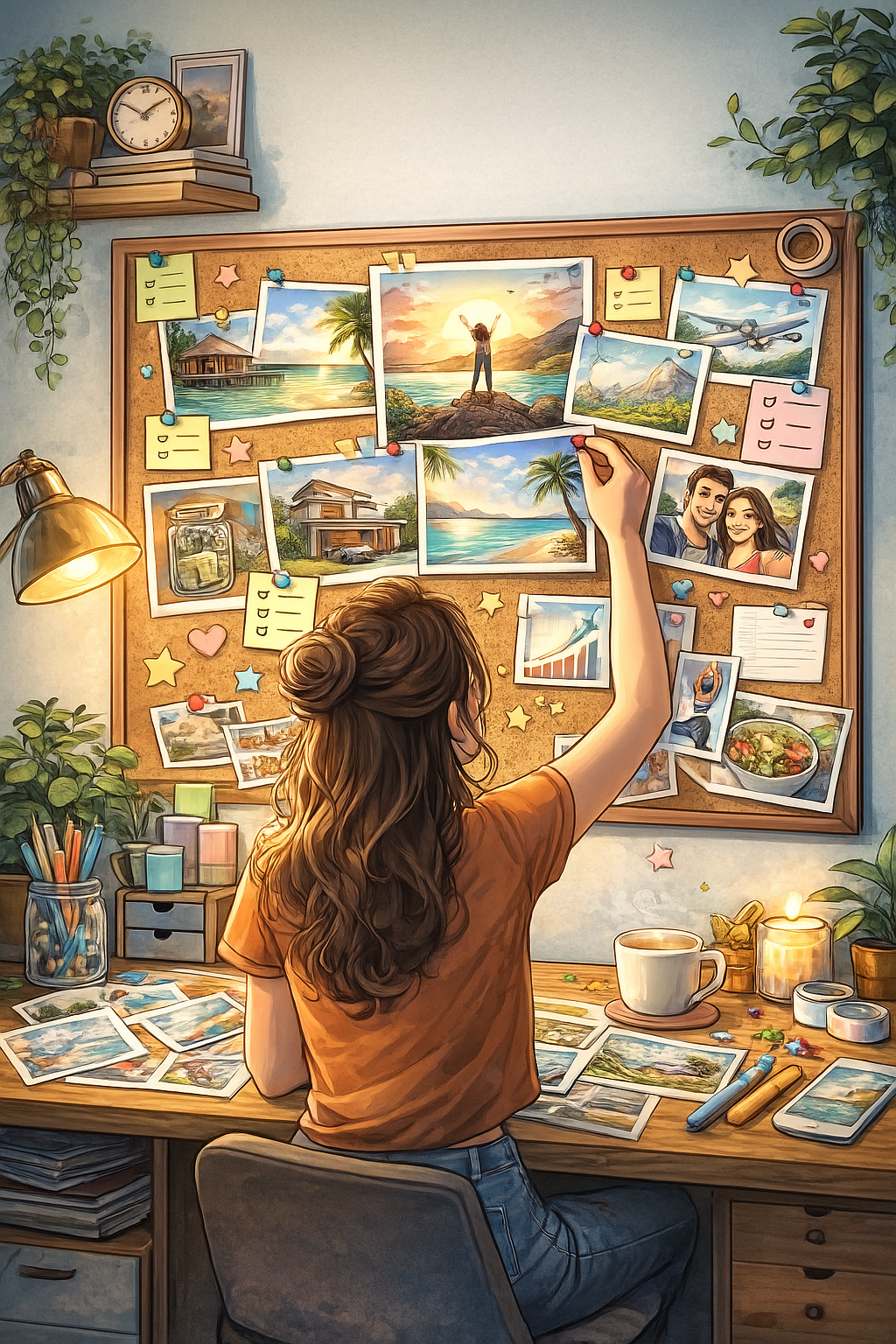
A vision board is one of the simplest yet most powerful manifestation tools you can use. It takes your ideas, dreams, and goals and transforms them into a visual experience you can see every day. Many people underestimate how strongly the subconscious mind responds to imagery, which is why learning how to build an effective vision board goes far beyond creating a collage. When done intentionally, a vision board becomes a daily reminder of possibility, alignment, and purposeful living. It helps you stay connected to what truly matters, maintain motivation during slow seasons, and reinforce the direction you want your life to move toward.
One reason vision boards work so well is clarity. In a world full of distractions, it’s easy to lose focus on deeper desires. Exploring different vision board ideas allows you to refine what you truly want and express it visually in a way that feels personal and inspiring. Using a vision board template can also help structure your thoughts if you’re unsure where to begin, while reviewing a vision board sample can spark creativity and confidence in the process.
Each image or phrase you include reinforces intention and direction, gradually shaping mindset and emotional alignment. This article will guide you step by step on how to build an effective vision board using emotion, scripting, and visual storytelling—whether your focus is abundance, confidence, love, success, or inner peace.
Why Vision Boards Work

Vision boards work because they create mental rehearsal. When you repeatedly look at images and words that represent the life you want, your subconscious begins to form emotional familiarity with those outcomes. This familiarity reduces doubt, increases confidence, and strengthens belief—three essential ingredients for manifestation. Exploring different vision board ideas allows you to choose visuals that truly resonate with your goals, making the rehearsal process more impactful. The more your mind accepts something as possible, the easier it becomes to take aligned action toward it.
Another reason vision boards are so effective is that they engage both logic and emotion. You choose images intellectually, but your reaction to them is emotional. Whether you follow a structured vision board template or draw inspiration from a vision board sample, the emotional response those visuals create is what drives alignment. When something on your vision board excites you, motivates you, or fills you with hope, your emotional energy shifts. Vision boards also create accountability. Even without consciously thinking about them, your brain continues processing the images you see daily. This subtle influence shapes decisions, reinforces healthier habits, and encourages more courageous choices—making it harder to forget your goals when your environment constantly reflects them.
How to Apply the Steps to Build an Effective Vision Board

Learning how to build an effective vision board begins with clarity. Before gathering images or supplies, take time to define what you truly want to focus on. This could include career growth, health, relationships, confidence, or financial stability. Start by writing down your intentions in simple, emotionally meaningful language. Once your direction is clear, explore different vision board ideas that match your goals—some people prefer digital boards, while others enjoy creating physical boards with magazines, photos, and handwritten affirmations. The key is choosing visuals that make you feel inspired and connected, not pressured or overwhelmed.
The next step is organizing your board in a way that feels intentional and easy to revisit. Using a vision board template can help if you enjoy structure, especially if you want sections for different life areas. Templates provide guidance without limiting creativity, making them ideal for beginners. You can also review a vision board sample to spark inspiration and see how others visually represent their goals. Remember, your board doesn’t need to look perfect—it needs to feel personal. Arrange images and words in a way that naturally draws your attention and evokes positive emotion when you look at it.
Finally, application is what brings your vision board to life. Place your board somewhere you’ll see it daily, such as near your workspace or bedroom. This daily exposure reinforces focus and helps your subconscious stay aligned with your intentions. Revisiting your board regularly—while journaling, visualizing, or reflecting—strengthens its impact. Understanding how to build an effective vision board is not just about creating it once, but about engaging with it consistently. Over time, this practice supports clarity, motivation, and aligned action, turning your vision board into a powerful tool for intentional living.
Choosing Your Vision Board Theme
Choosing a theme is an important part of learning how to build an effective vision board. Some people prefer to focus their board on a single area—such as career success or romantic relationships—while others create a multi-category board that represents a holistic vision for their life. The theme you choose should feel aligned with your current priorities and desires.
A theme also helps you select the right imagery. For example, if your theme is confidence, you might add images of empowered body language, affirmations like “I am enough,” or representations of experiences that expand your comfort zone. If your theme is abundance, you might include visuals of financial growth, opportunities, or environments that make you feel prosperous. A clear theme ensures your board feels intentional rather than random.
Using Images That Trigger Emotion

When learning how to build an effective vision board, emotional resonance is key. The images you choose should make you feel something. A picture that inspires excitement or peace is far more powerful than an aesthetically pleasing photo that feels emotionally neutral. Your subconscious communicates through emotion, so choose visuals that activate the feeling of your desired reality.
Emotionally charged images also strengthen belief. The more real and familiar an outcome feels emotionally, the easier it becomes for your subconscious to adopt it as truth. This shift influences your daily habits, choices, and expectations, which all play a role in manifestation.
Incorporating Words, Quotes, and Affirmations
Adding words, phrases, or affirmations is one of the most effective vision board techniques. Words activate the logical part of the brain, while images activate the emotional side. When combined, they create powerful mental alignment. Choose statements that feel encouraging, empowering, or expansive. Examples include: “Everything is working in my favor,” “I am confident and capable,” or “My life is filled with opportunities.”
Using affirmations also reinforces clarity. Every time you read them, your mind receives a small reminder of your direction. Over time, these reminders strengthen your beliefs and expectations, creating internal momentum toward your goals.
Creating Your Vision Board
A simple vision board includes:
1. Set a clear intention or theme.
2. Gather images that trigger emotion.
3. Include words or affirmations that inspire you.
4. Arrange visuals in a way that feels aesthetically aligned.
5. Place the board somewhere you’ll see daily.
Following a guide ensures you build a board that is not just visually appealing, but energetically aligned with your desires.
Tips on How to Build an Effective Vision
Here are helpful vision board tips:
1. Don’t overthink the layout—emotion matters more than perfection.
2. Avoid clutter; leave breathing space for clarity.
3. Review and update your board every few months as your desires evolve.
These tips help your board remain aligned, relevant, and motivating throughout the year.
Keeping Your Vision Board Alive
A vision board is not something you create once and forget. It’s meant to be an active part of your manifestation practice. Spend a few moments each day looking at it intentionally. Let yourself feel the emotions connected to the images. Visualize small steps you can take to align with the life you’re creating. These daily interactions keep your board energetically “alive.”
Refreshing your board occasionally is also helpful. As your desires evolve or you manifest certain goals, update images and words to match your new direction. This keeps your mind clear and focused, and ensures your board continues supporting your growth.
Conclusion
Learning how to build an effective vision board is about more than arts and crafts—it’s about clarity, emotion, and intentional focus. A vision board helps you see your future self every day, reminding you of what truly matters. When your visuals, words, and emotions align, your subconscious begins supporting your manifestations in powerful ways. With the right steps, meaningful imagery, and consistent engagement, your vision board becomes a daily tool for transformation and self-discovery.
Deepening Your Vision Board Practice Through Daily Alignment
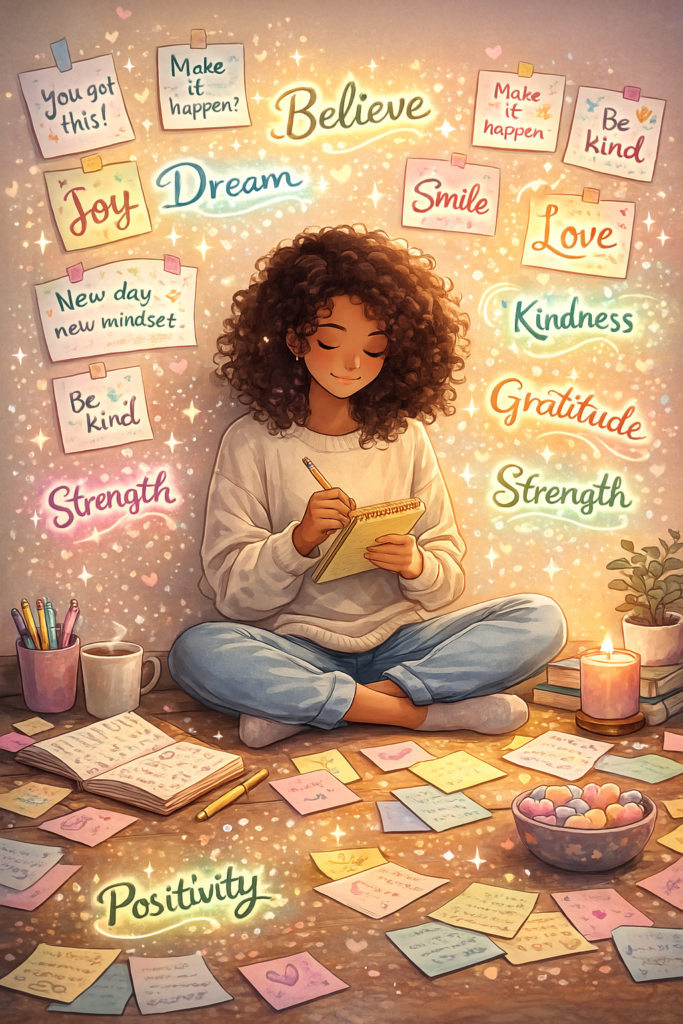
Beyond creating the board itself, one of the most powerful ways to strengthen your manifestation results is by building daily alignment rituals around it. Understanding how to build an effective vision board goes beyond cutting out images or arranging words—it’s about consistently engaging with the board on an emotional level. A vision board is not meant to be a passive decoration; it becomes significantly more effective when you actively connect with it. These small daily habits keep your desires present in your subconscious mind, helping you stay focused, grounded, and inspired even during periods of low motivation. Exploring different vision board ideas can also help you discover rituals that feel natural and enjoyable rather than forced.
Daily alignment can be simple and flexible. For some people, it means taking one quiet minute each morning to look at their board and breathe in the feelings associated with the images. Others prefer journaling a few lines about why their goals matter or visualizing one intention unfolding. If you’re using a vision board template, this process can feel even more structured, especially when prompts or sections guide reflection.
Reviewing a vision board sample can also inspire new alignment practices by showing how others emotionally engage with their boards. These micro-practices create emotional resonance, which the subconscious mind responds to far more strongly than logic alone. When you connect with the emotion behind your vision, belief strengthens—and belief is the foundation of meaningful manifestation.
Another powerful alignment ritual is evening reflection. Before bed, take a moment to notice any small signs of progress, mindset shifts, or experiences that felt aligned with your vision. These signs don’t need to be dramatic—an encouraging conversation, a new idea, or a moment of clarity all count. Acknowledging them trains your brain to recognize progress rather than dismiss it.
Over time, you begin collecting emotional evidence that your manifestation is unfolding, which builds confidence and trust. Finally, approach your vision board with curiosity instead of pressure. The purpose of learning how to build an effective vision board is not to force outcomes, but to align your thoughts, emotions, and daily actions with the life you want to experience. With consistency, openness, and patience, your vision board evolves from a creative project into a living tool for
Leave a Reply