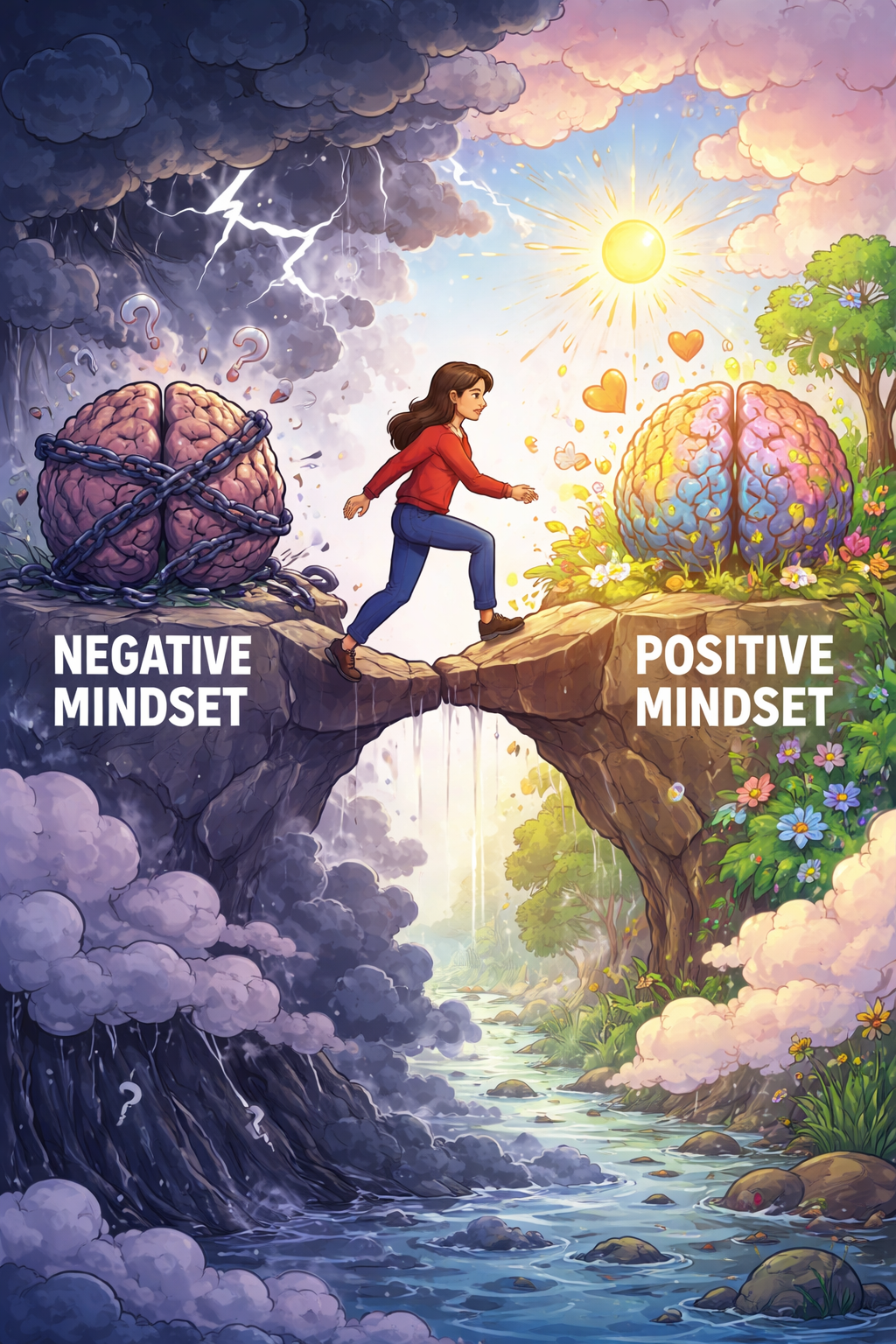
Mindset shapes how you interpret effort, failure, and possibility long before results appear. It influences the choices you make when no one is watching and the meaning you assign to setbacks when progress feels slow. For a deeper understanding of how internal belief structures influence outcomes, the article How Belief Systems Affect Manifestation explores the connection between thought patterns and lived experience. This is why mindset is important—not because it guarantees success, but because it determines how long you stay in the process when outcomes are uncertain. Long before circumstances change, mindset quietly decides whether you persist, retreat, or redefine what’s possible.
Understanding why mindset matters for your success requires looking beyond positive thinking. A mindset shift doesn’t simply add confidence; it challenges familiar patterns of thought that once kept you safe. When old beliefs are questioned, discomfort naturally follows. The brain prefers predictability, even when that predictability limits growth. This explains why change often feels wrong before it feels right—because the mind is adjusting to a new internal standard that hasn’t yet been reinforced by evidence.
This is also why mindset is everything, and why mindset matters at the deepest level of personal change. When your thinking evolves, your tolerance for uncertainty expands, your reactions soften, and your actions become more aligned with who you’re becoming rather than who you’ve been. The unease that accompanies this shift isn’t a warning sign—it’s a transition. Staying with that discomfort allows clarity to emerge, and over time, what once felt unnatural becomes the new normal.
Why Mindset Is Everything—And Why Your Brain Resists Letting Go of the Old One

Mindset governs more than attitude—it governs what the brain allows you to perceive as possible. This is why mindset is important at a level most people overlook: it filters reality before you ever respond to it. Opportunities, risks, and even self-belief are interpreted through existing mental frameworks. When those frameworks change, the brain experiences uncertainty, and uncertainty triggers resistance. The discomfort isn’t a flaw in growth; it’s the nervous system trying to preserve familiarity, even if that familiarity no longer serves you.
This resistance explains why mindset matters for your success far beyond strategy or effort. The brain doesn’t easily release old beliefs because they once provided emotional safety, predictability, or identity. Letting go feels like losing part of yourself, even when you’re gaining something better. That’s why mindset is everything—because until your internal reference point shifts, new behaviors feel temporary and new goals feel fragile. Growth asks the brain to trade certainty for possibility, and that trade is rarely comfortable at first.
Over time, repetition softens resistance. New thoughts become familiar, new reactions feel less forced, and what once felt threatening becomes normal. This is why mindset matters in the long run: it sets the ceiling for what you’re willing to tolerate, attempt, and sustain. When the brain finally updates its definition of “safe,” progress stops feeling like struggle and starts feeling like alignment. Mindset doesn’t change all at once—it releases its grip gradually, and in that release, everything else begins to move.
The Inner Tension That Appears When Growth Challenges Familiar Thinking

There is a specific kind of tension that surfaces when growth begins—not loud resistance, but a quiet unease that makes new thoughts feel unstable. This tension arises because familiar thinking has long acted as an internal compass, even when it limited you. That’s why mindset is important at this stage: it determines whether discomfort is interpreted as danger or as a signal of expansion. When old beliefs are challenged, the mind doesn’t immediately feel empowered—it feels unsettled, as if the ground beneath it has shifted.
This inner friction reveals why mindset matters for your success more than motivation or confidence alone. Success requires sustained exposure to uncertainty, and familiar thinking is designed to minimize it. As growth introduces new perspectives, the brain attempts to pull you back toward what feels predictable. This is why mindset is everything—because until your internal reference point updates, progress will feel emotionally risky, even when it’s logically sound. The tension isn’t a sign that you’re doing something wrong; it’s proof that your thinking is being stretched beyond its old limits.
What determines the outcome is how you respond to that tension. Avoiding it reinforces old patterns; staying present with it allows integration to occur. This is why mindset matters in moments that feel ambiguous or uncomfortable. When you allow new ways of thinking to coexist with uncertainty long enough, the tension dissolves into clarity. What once felt foreign becomes familiar, and growth stops feeling like a threat—it starts feeling like home.
Why Discomfort Is Often the First Sign That a Mindset Shift Is Working

Discomfort often arrives before confidence because change begins internally long before it becomes visible. When a mindset shift starts working, it disrupts automatic thoughts and familiar emotional responses, creating a sense of friction. This is why mindset is important to recognize in moments of unease—the discomfort isn’t random; it’s the brain adjusting to a new framework. Old beliefs no longer fit, but new ones haven’t fully settled, leaving you in an in-between state that feels awkward rather than empowering.
This transitional discomfort explains why mindset matters for your success more than immediate certainty. Growth doesn’t announce itself with clarity at first; it shows up as questioning, hesitation, and emotional exposure. Because why mindset is everything lies in how it reshapes identity, the mind resists change until it feels safe to adopt a new internal standard. Discomfort signals that your thinking is no longer running on autopilot—and that awareness is the entry point for lasting transformation.
What matters most is how you interpret the feeling. Avoiding discomfort reinforces old limits; staying with it allows new patterns to integrate. This is why mindset matters during moments that feel unstable or confusing. When you remain present through the unease, the mind gradually recalibrates, and what once felt wrong begins to feel aligned. Discomfort, then, isn’t a warning—it’s often the clearest evidence that your mindset is shifting in the right direction.
When Your Thoughts Change Faster Than Your Sense of Self Can Catch Up

There is a strange, disorienting phase of growth where your thinking evolves faster than your identity can absorb it. You begin to understand new perspectives, make healthier interpretations, and respond differently—yet internally, you still feel like the old version of yourself. This gap can create confusion, self-doubt, and the sense that you’re “pretending” to be someone you haven’t fully become. Nothing is wrong in this phase; it’s the natural delay between insight and embodiment.
During this period, actions may feel unfamiliar even when they align with your new thinking. You might intellectually know you deserve more, think more expansively, or approach challenges with greater awareness, but emotionally, those shifts haven’t settled yet. The mind has updated its software, but the sense of self is still running on an older operating system. This mismatch can make progress feel unstable, as if you’re ahead of yourself—but it’s actually a sign that change is in motion.
What closes this gap is repetition without pressure. Identity doesn’t change through understanding alone; it changes when new thoughts are lived long enough to feel normal. As behavior, reflection, and experience begin to align, the sense of self gradually catches up. The discomfort fades, confidence becomes quieter but steadier, and what once felt forced becomes natural. Growth completes itself not when you think differently—but when thinking differently finally feels like who you are.
How Staying With the Unease Leads to Clarity, Confidence, and Emotional Freedom
Unease often gets misread as a problem to solve, when in reality it’s a process asking to be completed. When familiar thinking loosens its grip, the mind enters a temporary state of uncertainty where answers aren’t immediate and certainty feels distant. Escaping this state may offer short-term comfort, but staying with it allows deeper understanding to surface. In that stillness, reactions slow, assumptions soften, and awareness expands—not through force, but through patience.
As you remain present with unease, something subtle begins to shift. Emotional reactions lose their urgency, and clarity starts to emerge organically rather than being chased. Confidence grows quietly here—not as bravado, but as trust in your ability to navigate ambiguity. You stop needing instant reassurance because you’ve learned that discomfort doesn’t mean danger; it means transition. This is the phase where inner alignment begins to replace inner conflict.
Over time, emotional freedom develops as the need to control outcomes fades. Staying with unease teaches the nervous system that uncertainty is survivable—and even constructive. Old patterns dissolve not because they’re rejected, but because they’re no longer needed. What remains is a grounded sense of self that doesn’t depend on certainty to move forward. In this space, growth becomes less about pushing and more about allowing, and clarity arrives as a natural consequence of staying present through the unknown.
Conclusion
Changing your mindset feels uncomfortable because it disrupts what once felt familiar and safe. As old thinking patterns loosen, inner tension naturally appears, discomfort signals growth, and thoughts begin shifting faster than identity can follow. This transition explains why mindset is important—it governs how you interpret uncertainty, handle unease, and stay present when clarity hasn’t arrived yet. Growth doesn’t begin with confidence; it begins with friction. That friction isn’t a sign you’re failing—it’s evidence that familiar limits are being challenged and expanded.
Staying with that discomfort is what transforms awareness into confidence and freedom. Over time, new ways of thinking settle, identity catches up, and what once felt foreign becomes natural. This is why mindset matters for your success and why mindset is everything: it determines whether discomfort becomes a dead end or a doorway. When unease is met with patience instead of avoidance, clarity emerges without force, and progress stabilizes from within. Ultimately, why mindset matters is simple—when your thinking aligns with who you’re becoming, growth stops feeling like resistance and starts feeling like home.
Leave a Reply