
You’ve probably told yourself, “I just need more discipline.” Yet weeks later, the same habit slips return, leaving you frustrated and questioning your commitment. This is the quiet tension behind why willpower alone doesn’t create lasting habits. The problem isn’t that you lack strength—it’s that willpower alone isn’t enough to override deeply wired behavioral patterns. Motivation fluctuates with stress, fatigue, and emotion. When your strategy depends solely on intensity, it collapses the moment your energy dips.
Many people wonder why willpower doesn’t work the way they expect it to. Psychologically, willpower functions like a limited resource. It requires conscious effort, decision-making, and emotional regulation—all of which drain over time. Meanwhile, habits operate automatically, driven by subconscious loops that don’t require negotiation. This imbalance explains why willpower fails to build habits that endure beyond the initial burst of enthusiasm. You cannot outmuscle a system that runs beneath awareness with sheer effort alone.
The shift happens when you stop fighting your behavior and start understanding it. Sustainable change is less about pushing harder and more about restructuring the cues, repetitions, and rewards that guide action. This principle connects closely with the ideas explored in The Science of Habits: How Small Daily Actions Reprogram Your Subconscious Mind, where the mechanics of automatic behavior are examined in depth. When you design habits that require less willpower and more structure, motivation stops being the hero—and consistency becomes the foundation.
Why Willpower Alone Doesn’t Create Lasting Habits: The Exhausting Cycle of Trying Harder and Falling Back

The cycle usually begins with a surge of determination. You promise yourself this time will be different. You push harder, wake up earlier, cut distractions, and rely on sheer effort to sustain momentum. For a while, it works—until life interrupts. Stress rises, sleep decreases, emotions fluctuate. Then the old behavior quietly returns. This repeating loop is the lived explanation of why willpower alone doesn’t create lasting habits. The issue is not character; it is structure. When your strategy depends entirely on effort, every low-energy day becomes a threat.
Here is the uncomfortable truth: willpower alone isn’t enough because it is reactive, not foundational. It forces behavior in the moment but does not redesign the system behind it. That is precisely why willpower doesn’t work long term. The brain favors efficiency and familiarity, so when conscious energy drops, it defaults to established patterns. This is also why willpower fails to build habits that endure beyond motivation spikes. Effort can initiate change, but it cannot sustain it without reinforcement. Trying harder each time you slip only increases frustration because the underlying cues and routines remain untouched.
Breaking the cycle requires shifting from intensity to infrastructure. Instead of asking, “How can I try harder?” ask, “How can I make this easier to repeat?” Reduce friction for the behavior you want. Increase friction for the one you are replacing. Shrink the habit until it feels almost impossible to fail. Consistency built on simplicity outperforms bursts built on emotion. When you redesign your approach this way, falling back becomes less frequent—not because you are stronger, but because your system is smarter. And once your habits rely less on force and more on structure, sustainability stops feeling exhausting and starts feeling inevitable.
The Myth of Self-Control: Why Motivation Fades Faster Than You Think

Self-control feels powerful in the moment. You resist temptation, override distraction, and push through discomfort. But motivation is emotionally driven, and emotions are unstable. They rise with inspiration and collapse under fatigue. This instability explains why willpower alone doesn’t create lasting habits. The human brain is not designed to operate at peak restraint indefinitely. When you rely solely on motivation, you are building your progress on something that fluctuates daily.
The deeper myth is believing discipline is about constant force. In reality, willpower alone isn’t enough because it competes with automatic patterns that require far less energy. When stress increases or decision fatigue sets in, the brain conserves resources by returning to familiar routines. That is precisely why willpower doesn’t work as a long-term strategy. It demands conscious energy every time. Over time, this drains mental reserves, which is also why willpower fails to build habits that survive busy schedules, emotional lows, or unexpected disruptions.
The solution is counterintuitive: reduce the need for self-control. Build systems that make the right action the easy action. Automate decisions in advance. Prepare environments that support your goals. Lower the entry point so consistency does not depend on mood. When motivation fades—as it always will—structure remains. Habits that survive low-energy days are not fueled by intensity; they are supported by design. And when your habits no longer rely on emotional peaks, progress becomes steadier, calmer, and far more sustainable.
Discipline or Design? The Emotional Toll of Relying Only on Willpower

There is a quiet emotional cost to constantly telling yourself to “try harder.” Each time you rely solely on discipline, you create a cycle of pressure, short-lived success, and eventual guilt. This is the hidden strain behind why willpower alone doesn’t create lasting habits. When progress depends entirely on inner force, every lapse feels personal. Over time, this builds frustration rather than resilience. You begin to associate growth with exhaustion instead of empowerment.
The truth is uncomfortable but freeing: willpower alone isn’t enough because it treats behavior as a battle instead of a blueprint. If every action requires negotiation, you are fighting your own brain daily. That is why willpower doesn’t work consistently—it demands energy that fluctuates with stress, sleep, and emotion. And it explains why willpower fails to build habits that survive real life. The brain defaults to what is easiest, not what is most noble. When the environment and structure remain unchanged, effort alone becomes a temporary override rather than a permanent shift.
The alternative is design over force. Instead of proving your discipline every day, redesign the conditions that trigger your behavior. Prepare in advance. Simplify decisions. Make desired actions obvious and accessible. When structure carries the weight, emotion carries less strain. Discipline then becomes lighter, not heavier. Growth feels sustainable because it is supported, not forced. In the end, the question is not whether you are strong enough—it is whether your system is smart enough to support who you are trying to become.
When Effort Isn’t Enough: The Brain Science Behind Repeated Failure
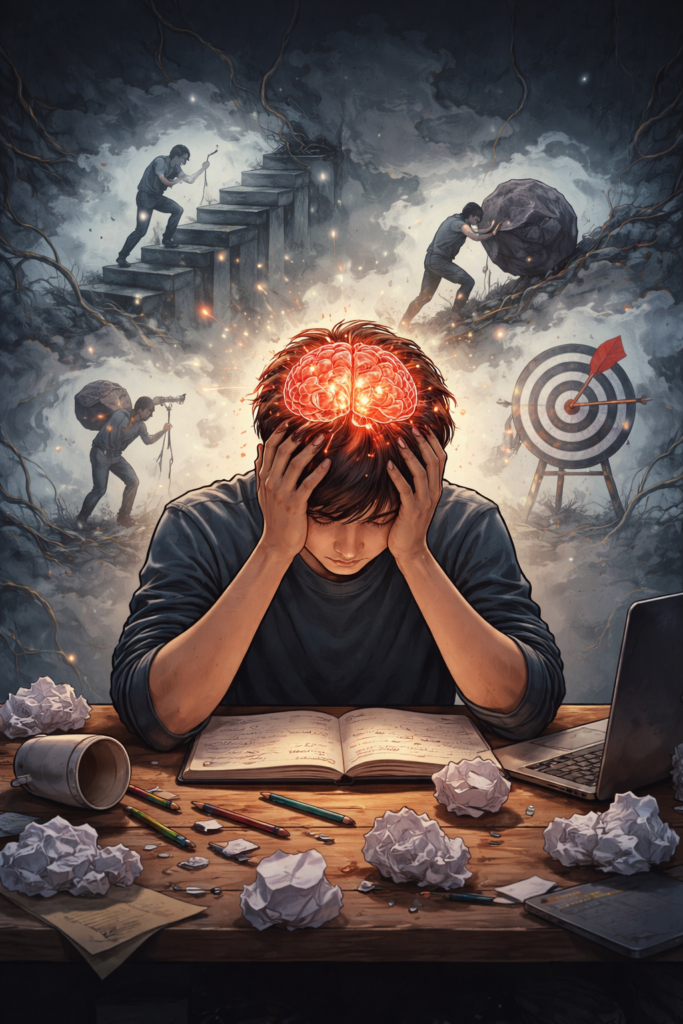
Repeated failure rarely means a lack of effort. More often, it reflects a mismatch between conscious intention and subconscious programming. You decide to change, apply intense focus, and sustain the new behavior for days or weeks. Then something subtle happens—stress, fatigue, or distraction interrupts—and you return to old patterns. This cycle is a biological response, not a character flaw. It explains why willpower alone doesn’t create lasting habits. Effort can temporarily override automatic behavior, but it cannot permanently replace it without structural reinforcement.
The brain prioritizes efficiency. Once a behavior has been repeated enough times, it becomes encoded in neural pathways that operate with minimal energy. When cognitive resources decline, the brain defaults to what is familiar. That is why willpower doesn’t work reliably during high-pressure moments. You may start strong, but when emotional or mental fatigue increases, conscious control weakens. This is also why willpower fails to build habits that persist beyond the initial burst of motivation. If the underlying cues and rewards remain intact, the old loop reactivates as soon as effort drops.
Understanding this dynamic shifts the strategy entirely. Willpower alone isn’t enough because it addresses behavior at the surface level. Sustainable change requires altering the conditions that trigger the behavior in the first place. Reduce exposure to cues that prompt the old pattern. Attach new habits to existing routines. Lower the starting threshold so repetition feels manageable. When repetition strengthens the new pathway, reliance on effort decreases naturally. Failure then becomes feedback—not evidence of weakness, but a signal that the system needs redesign rather than more force.
Build Systems, Not Struggle: How to Create Habits That Survive Low-Motivation Days
Low-motivation days are not interruptions—they are inevitabilities. If your habit depends on feeling inspired, it will collapse the moment inspiration fades. That is why the shift from struggle to system is crucial. A system removes daily negotiation. It answers the question before your mood does. Instead of deciding whether to act, you follow a pre-designed structure that makes action the default. When habits are supported by predictable cues, prepared tools, and simplified steps, they continue even when enthusiasm is absent.
Start by lowering the activation energy of your habits. Make the first step so small it feels almost effortless. Lay out workout clothes the night before. Pre-write the first sentence of tomorrow’s work. Set a timer for five focused minutes instead of committing to an hour. Systems thrive on consistency, not intensity. The goal is not to perform at your best every day; it is to perform at your minimum standard reliably. When your minimum is protected, progress compounds quietly in the background.
Finally, build recovery into your structure. Plan for setbacks rather than reacting to them. Decide in advance what “staying on track” looks like after a missed day. Create visual tracking systems that emphasize streak continuation over perfection. When structure anticipates imperfection, momentum survives emotional dips. Habits that endure are not powered by force—they are protected by design. And once your routines are strong enough to carry you through low-energy days, growth stops feeling fragile and starts feeling stable.
Conclusion
Relying solely on self-control creates an exhausting cycle of trying harder, slipping back, and blaming yourself. Motivation fades faster than we expect because it is emotional, not structural. When effort becomes the only strategy, discipline turns into pressure, and repeated failure feels personal rather than predictable. The brain defaults to efficiency, not intention, which is why bursts of determination often collapse under stress or fatigue. Understanding this removes the shame from the struggle. The issue is not your strength—it is your strategy.
Lasting habits emerge when you stop fighting behavior at the surface and start redesigning the system beneath it. Instead of leaning on fluctuating motivation, build structures that carry you through low-energy days. Simplify the starting point, prepare your environment in advance, and reduce the number of decisions required in the moment. Habits that survive are not powered by constant force; they are supported by thoughtful design. When you shift from struggle to systems, the psychological battle eases—and consistency becomes a product of structure, not willpower.
Leave a Reply