
You can know exactly what to do and still not do it. You can read the books, understand the science, even explain the strategy to someone else—yet remain stuck in the same patterns. This is the uncomfortable truth behind why awareness doesn’t change behavior. Information alone rarely transforms action. In fact, in the tension between awareness vs behavior change, many people discover that insight feels powerful in the moment but powerless in practice. Knowing is cognitive; change is behavioral—and the bridge between the two is far more complex than we assume.
It’s tempting to believe that once we see the problem clearly, progress will follow naturally. But in reality, raising awareness does nothing if it doesn’t disrupt identity, environment, or emotional patterns. This explains why knowing isn’t enough to change habits. The mind can agree with an idea while the nervous system resists it. Habits are not just logical routines; they are emotional shortcuts and identity reinforcements. Understanding the psychology of behavior change means recognizing that repetition, context, and belief systems matter more than momentary realization.
True transformation begins when awareness becomes embodied. It’s not just about understanding what you should do; it’s about reshaping how you see yourself and what feels familiar. This deeper layer connects closely to How Belief Systems Affect Manifestation, where internal narratives quietly determine external results. Awareness is the spark—but without alignment, it never becomes fuel. The goal is not to gather more information; it’s to close the gap between insight and implementation.
Why Awareness Doesn’t Change Behavior: When Knowing the Truth Still Leaves You Stuck
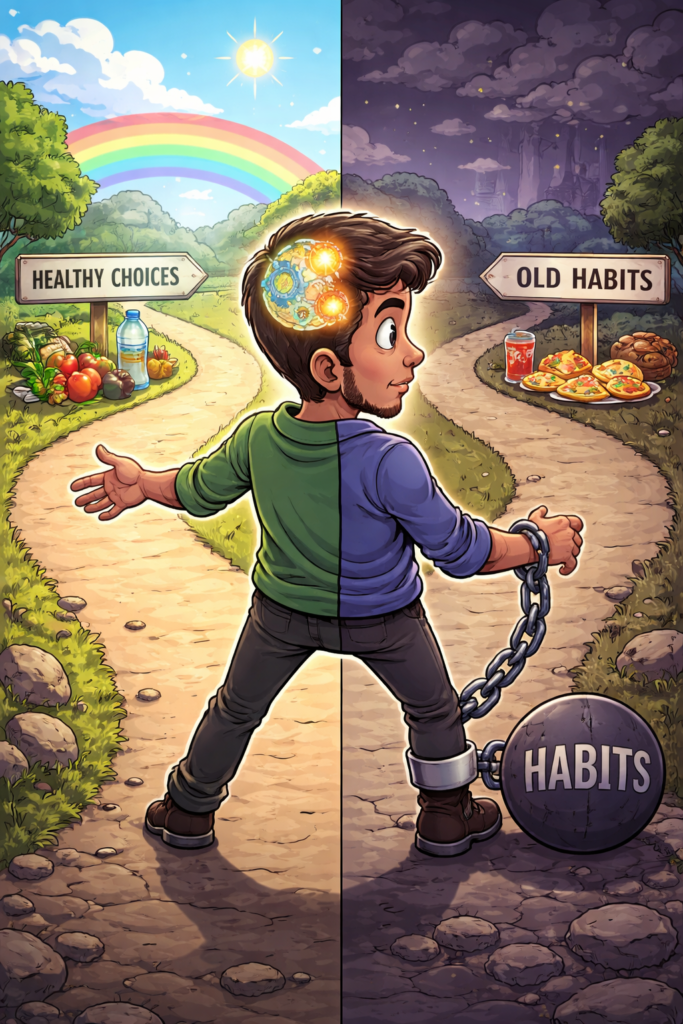
You can recognize a destructive pattern in your life and still repeat it the next day. That contradiction reveals the deeper truth behind why awareness doesn’t change behavior. Insight feels like progress because it reduces confusion—but clarity is not the same as transformation. The tension between awareness vs behavior change lies in the fact that behavior is driven less by knowledge and more by familiarity. The brain prioritizes what feels safe and practiced over what feels logical and correct.
Many people assume that once they understand the consequences, change will follow. But raising awareness does nothing if it doesn’t interrupt the emotional rewards attached to the old behavior. This is exactly why knowing isn’t enough to change habits. Habits are loops reinforced by comfort, identity, and repetition. The psychology of behavior change shows that sustainable transformation requires more than cognitive agreement—it demands structural shifts. Without altering cues, environments, and daily systems, awareness remains intellectual, not operational.
If knowing the truth still leaves you stuck, the solution is not more information—it’s friction and design. Reduce access to the old pattern. Increase convenience for the new one. Pair awareness with a small, repeatable action that aligns with the identity you want to build. Insight should lead to experimentation, not self-criticism. When you move from understanding the problem to restructuring your environment, awareness becomes embodied. And that is when change finally begins to stick.
The Intention Illusion: Why Insight Feels Powerful—but Fades Without Action

Insight can feel like transformation. The moment you recognize a pattern, name it, and understand its consequences, you experience relief. It feels productive. It feels mature. Yet this is the intention illusion—the emotional high of realization without the follow-through of repetition. This is precisely why awareness doesn’t change behavior. The brain rewards insight with a sense of completion, even though no real behavioral shift has occurred. The gap between awareness vs behavior change is not about intelligence; it’s about execution.
Many people believe that once they “get it,” change should naturally follow. But raising awareness does nothing unless it is paired with deliberate action. This is also why knowing isn’t enough to change habits. Understanding a habit intellectually does not weaken the neural pathways that sustain it. The psychology of behavior change shows that repetition, context, and reinforcement—not insight alone—reshape behavior. Without action, awareness becomes a comforting illusion, a story we tell ourselves about progress that hasn’t yet happened.
To break this illusion, attach every insight to a specific, small behavior. If you realize you scroll too much at night, define a replacement action—place your phone in another room or set a timer. If you notice emotional eating, plan a pause ritual before meals. Awareness should trigger structure, not self-criticism. When you convert insight into a physical adjustment in your environment or routine, knowledge becomes movement. And movement, repeated consistently, becomes change.
From Insight to Identity: The Emotional Resistance That Blocks Real Change

Insight is cognitive; identity is emotional. You can understand exactly what needs to change and still feel an invisible resistance when it’s time to act. This tension explains why awareness doesn’t change behavior. Awareness lives in the mind, but habits live in identity. The gap between awareness vs behavior change often appears when new actions threaten how you currently see yourself. If your identity is tied to comfort, busyness, or avoidance, even positive insight can feel destabilizing.
This is also why raising awareness does nothing when it isn’t followed by identity-level shifts. You may know that exercising daily is beneficial, but if you don’t yet see yourself as “someone who trains consistently,” behavior will feel forced. This is why knowing isn’t enough to change habits. The psychology of behavior change shows that repetition rewires not only neural pathways but also self-concept. Until the action feels aligned with who you believe you are becoming, resistance will surface—not because you lack discipline, but because identity is protecting familiarity.
To move from insight to identity, shrink the behavior and attach it to a statement of self. Instead of “I’m trying to work out,” say, “I am becoming someone who prioritizes health.” Then act in a way that supports that narrative, even in small doses. Consistent micro-actions gradually soften emotional resistance because they make the new identity feel less foreign. Real change occurs when behavior no longer feels like effortful correction, but like natural expression. Awareness opens the door; identity decides whether you walk through it.
The Comfort of Familiar Patterns: Why Your Brain Chooses Safety Over Growth

Your brain is not designed for constant growth—it is designed for efficiency and safety. Familiar behaviors require less energy, fewer decisions, and less emotional risk. Even when you clearly understand what needs to change, the pull of routine can feel stronger than logic. This is one of the deeper reasons why awareness doesn’t change behavior. The mind can recognize a better path while the nervous system clings to what feels predictable. In the tension between awareness vs behavior change, comfort often wins.
It’s easy to believe that once you “see” the pattern, transformation will follow. But in reality, raising awareness does nothing unless it challenges the emotional comfort tied to the old habit. This is why knowing isn’t enough to change habits. Growth requires stepping into uncertainty, and uncertainty feels unsafe to the brain. The psychology of behavior change shows that repetition builds familiarity—and familiarity builds comfort. Until new behaviors feel familiar enough to register as safe, resistance will persist no matter how motivated you feel.
To shift from safety to growth, make change less threatening. Reduce the size of the new behavior. Pair it with something already familiar. Celebrate repetition, not intensity. The goal is not to force your brain into discomfort but to slowly redefine what feels normal. Over time, what once felt risky becomes routine. When the new pattern becomes the safe one, growth no longer feels like effort—it feels like home.
Closing the Gap: How to Turn Awareness Into Consistent, Lasting Action
Awareness is a spotlight—it shows you what’s there, but it doesn’t move anything by itself. To close the gap between insight and action, you must translate understanding into structure. That means designing behaviors that are small enough to repeat and clear enough to execute without debate. Insight should trigger a decision: What is the next physical step? When clarity turns into a defined action, momentum becomes possible.
Consistency grows from systems, not inspiration. Instead of relying on emotional readiness, anchor new behaviors to existing routines. If you want to read more, attach it to your morning coffee. If you want to exercise, tie it to a specific time and location. Remove friction from the desired action and increase friction for the old pattern. Progress becomes sustainable when the environment does part of the work for you. Structure reduces the need for constant willpower.
Finally, focus on identity reinforcement. Every repeated action is a vote for the person you are becoming. Track patterns over weeks, not moods over days. Expect resistance, but do not dramatize it. The goal is not dramatic transformation; it is steady alignment. When awareness leads to design, repetition, and identity shifts, it evolves from a moment of clarity into a lifestyle of change.
Conclusion
Awareness is powerful, but it is not transformative on its own. Insight can expose patterns, reveal truth, and create emotional clarity—yet still leave behavior unchanged. The intention illusion makes understanding feel like progress, while emotional resistance tied to identity quietly blocks action. Familiar patterns feel safer than growth, and the brain defaults to what is practiced, not what is logical. The real gap between knowing and doing is not intellectual—it is structural and emotional. Without shifting identity, environment, and repetition, awareness remains a moment of clarity rather than a movement toward change.
Closing that gap requires more than insight; it requires design. Action must follow awareness in concrete, repeatable ways. Small behaviors must reinforce a new self-concept. Systems must replace reliance on motivation. When insight is paired with friction adjustments, identity alignment, and consistent execution, awareness becomes embodied. Knowing the truth is only the beginning. Transformation happens when knowledge becomes routine, routine becomes identity, and identity reshapes behavior over time.
Leave a Reply