-

Why Slow Progress Is Real Progress (Even When It Feels Like You’re Falling Behind)
Progress rarely announces itself. Most of the time, it moves quietly—beneath routines, beneath doubt, beneath the pressure to appear ahead of where you are. This is why slow progress is real progress, even though it often feels invisible in the moment. When effort doesn’t immediately translate into visible results, the mind fills the silence with…
-

The Psychology of Delayed Results—and Why Waiting Feels So Much Harder Than Working
Waiting has a way of distorting time. Days feel heavier, weeks feel endless, and effort starts to feel invisible—not because nothing is happening, but because the mind is wired to notice movement only when it produces immediate feedback. This is the core of the psychology of delayed results: we struggle not with effort itself, but…
-

Why Progress Feels Invisible Right Before It Starts Changing Everything
Progress often feels discouraging not because nothing is happening, but because the most important changes happen quietly at first. This is why progress feels invisible in the early stages—growth doesn’t announce itself with instant results or dramatic shifts. Instead, it builds beneath the surface, reshaping habits, skills, and identity long before outcomes catch up. When…
-

Why Self Improvement Feels Exhausting—and Why Realignment Feels Like Coming Home
Self-improvement often begins with hope but slowly turns into pressure. Many people find themselves wondering why self improvement feels exhausting, even when they’re doing all the “right” things—setting goals, building habits, consuming growth content. The fatigue doesn’t come from effort alone; it comes from trying to change against yourself. When growth is framed as fixing…
-

Why Consistency Matters—and How It Quietly Reshapes Who You Become
Consistency rarely feels impressive, yet it quietly determines the direction of a life. Breakthroughs attract attention, but repetition shapes identity. This is why consistency matters more than moments of motivation or intensity—it trains who you are becoming when no one is watching. In fact, this principle echoes the deeper idea explored in Manifestation vs. Motivation:…
-

Identity Resistance Psychology: Why Trying to Become a New Person Backfires
Most attempts at personal transformation fail not because people lack desire, but because they misunderstand what they’re working against. Identity resistance psychology explains why dramatic self-reinvention often triggers internal pushback instead of progress. The brain resists change when change threatens familiar identity patterns—even positive ones—because consistency feels safer than growth. When someone tries to “become…
-

Identity-Based Habits: Why Real Change Starts When You Stop Trying to Change
Most attempts at change fail not because people lack discipline, but because they focus on outcomes while leaving identity untouched. This is where identity-based habits offer a different lens. Instead of asking, What do I need to do? they ask, Who am I becoming? When behavior is treated as an expression of identity rather than…
-
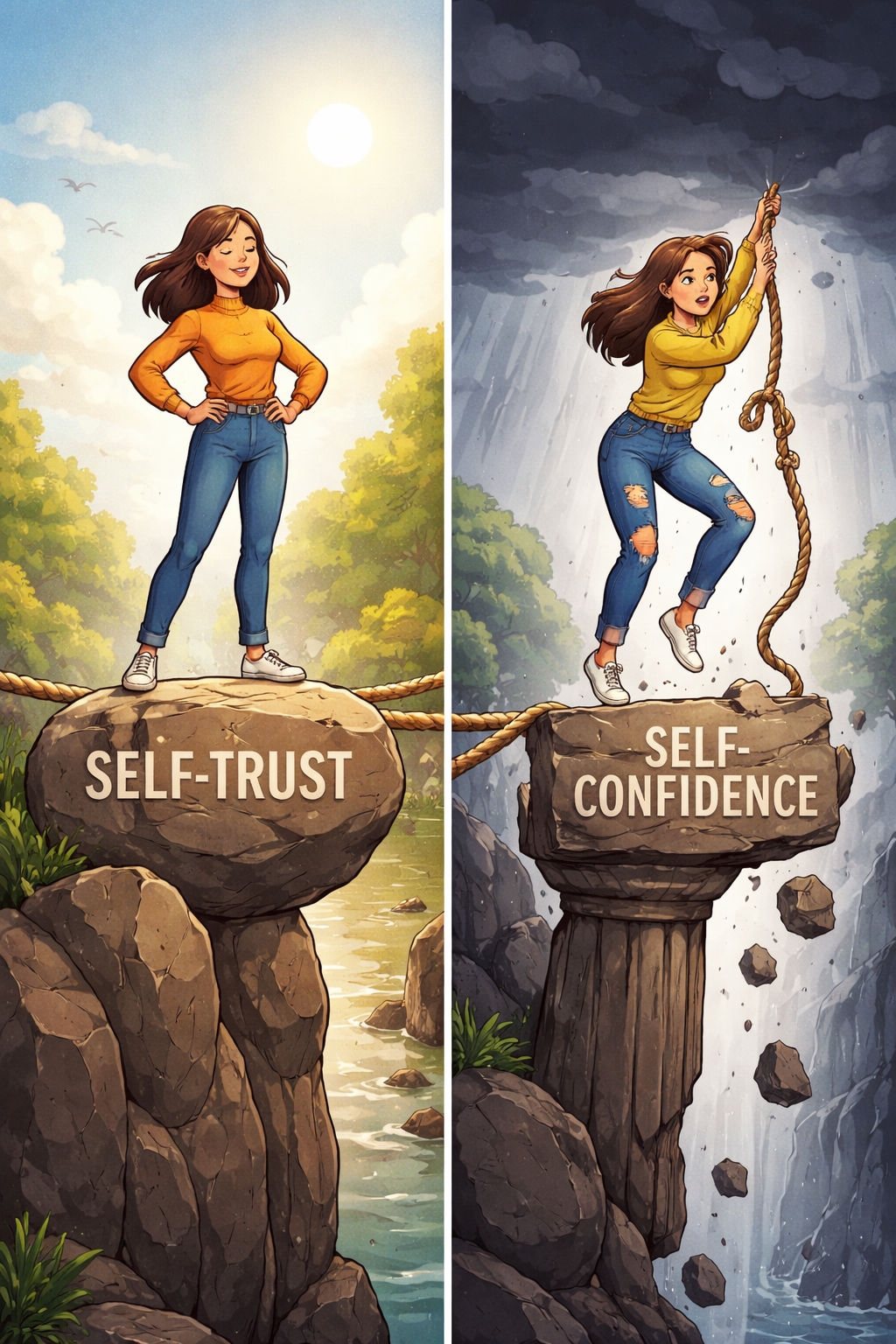
Self-Trust vs Self-Confidence: Why One Holds When the Other Falls Apart
Confidence often gets the spotlight—it looks bold, feels energizing, and draws attention. Yet many people discover that confidence can vanish quickly under pressure, failure, or uncertainty. This contrast is at the heart of self-trust vs self-confidence. One depends on how capable you feel in a moment; the other depends on how deeply you believe you…
Looking for something?
Latest Articles
- Becoming Your Future Self: Why Your Mind Moves Before Your Life Does

- Instant Change Psychology: The Hidden Build Behind Breakthroughs

- Quantum Leap Identity Shift: Why Your Identity Moves Before Your Results

- Quantum Leaping Meaning: The Identity Shift Behind Sudden Change

- Inner Dialogue Shapes Reality: The Voice That Programs Your Life

Follow Us
Advertisement