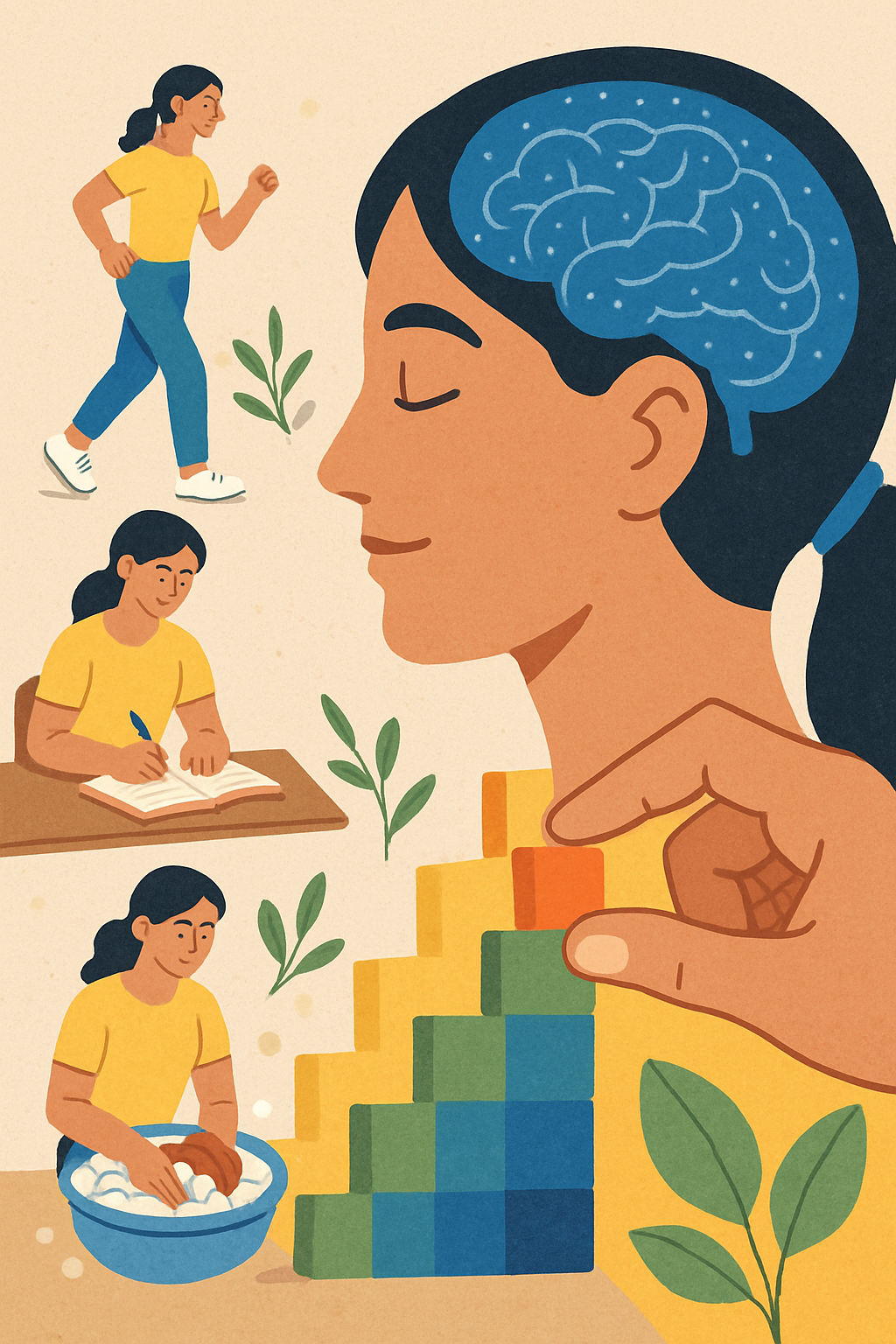
When most people think of habits, they picture routines like brushing teeth, drinking coffee, or scrolling social media. But habits are far more powerful than simple routines. They are the building blocks of identity and the key drivers of behavior. Psychologists estimate that up to 95% of what we do each day is automatic—shaped by subconscious patterns we rarely notice. This means that habits, not willpower, determine the trajectory of your life.
The science of habits shows us that lasting change doesn’t come from sudden, dramatic overhauls. It comes from small, consistent actions that gradually reprogram the subconscious mind. In this article, we’ll explore the psychology and neuroscience behind habits, explain why small actions matter more than big shifts, and provide practical steps to design habits that align with your desired identity and future.
The Habit Loop Explained
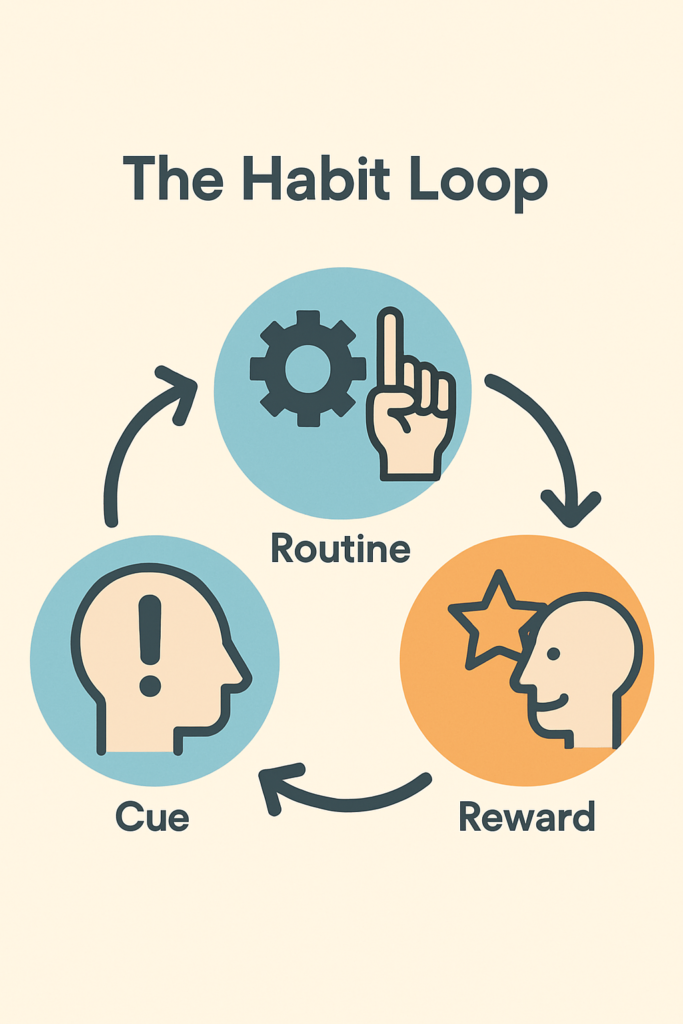
Charles Duhigg popularized the concept of the habit loop in The Power of Habit. Every habit follows the same cycle: Cue, routine, reward.
Cue – A trigger that signals your brain to start the habit.
Routine – The behavior itself.
Reward – The benefit your brain associates with the behavior.
For example: Stress (cue) → Eating chocolate (routine) → Relief (reward). Over time, the subconscious connects stress with chocolate. This is how both positive and negative habits form—your brain is not moral; it just learns patterns.
Understanding this loop is key. To change a habit, you don’t need to overhaul your life. You only need to identify the cue, adjust the routine, and keep the reward.
Why Small Actions Create Big Change

Big transformations fail because they demand too much, too soon. Someone who never works out may try to hit the gym daily for two hours. Motivation carries them briefly, but soon exhaustion sets in, and they quit.
In contrast, small habits are sustainable. Doing five push-ups daily feels almost effortless, but it proves to your subconscious: *I am someone who exercises.* Once identity shifts, scaling up feels natural. This is why tiny habits, repeated consistently, lead to massive change over time.
James Clear calls this the power of Atomic Habits. Small actions compound into remarkable results. The subconscious doesn’t care if the action is big or small. It only cares about repetition. Consistency rewires the brain.
The Neuroscience of Habits
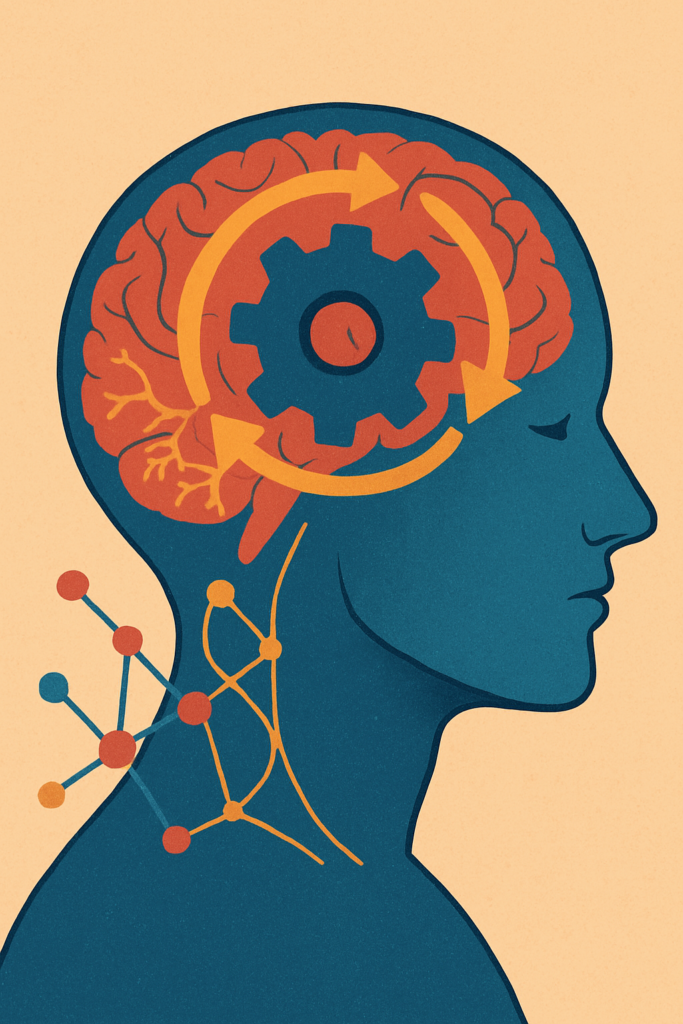
Habits are stored in the Basal Ganglia, a part of the brain responsible for automatic behaviors. When you repeat an action, neurons fire together, forming a pathway. The more you repeat, the stronger the connection. This process is called long-term potentiation.
Neuroplasticity, the brain’s ability to rewire itself, means you are never stuck with old habits. Every time you repeat a new behavior, you weaken old neural connections and strengthen new ones. This is why habits feel difficult at first but effortless later—the brain is literally rewiring itself.
This also explains why breaking habits is so hard. Old neural pathways don’t disappear immediately. They weaken over time as new ones replace them. Patience and consistency are essential.
How Habits Shape Identity
Every action you take is a vote for the type of person you want to become. When you meditate daily, you prove you are someone who values mental clarity. When you save $5 every day, you reinforce being financially disciplined. When you write a page daily, you prove you are a writer.
Identity doesn’t shift in one dramatic leap—it shifts gradually through evidence. Habits are that evidence. They tell your subconscious who you are. Once your identity aligns with your desired habits, you no longer need willpower. You simply act in harmony with your beliefs.
Practical Example: Money Habits
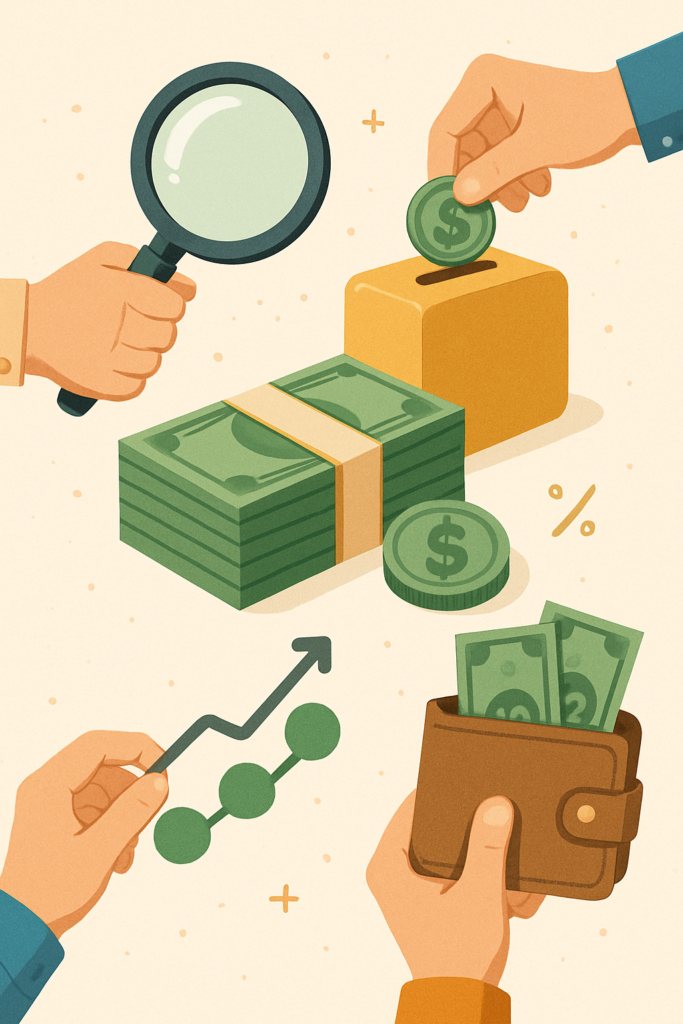
Let’s take financial habits as an example. Suppose you want to save $10,000. If you rely on motivation, you might cut spending drastically. But soon, deprivation leads to frustration, and you give up.
Instead, focus on small, identity-based habits. Automate saving $5 a day. Over time, you’ll build $150 a month, $1,800 a year. It may not sound like much, but the subconscious shift is powerful. You begin to see yourself as someone who saves money consistently. As that identity strengthens, you naturally increase savings, learn investing, and grow wealth.
This is how small habits compound into financial freedom.
Steps to Reprogram Your Subconscious with Habits
Here’s a practical framework:
1. Pick One Small Habit – Choose something so easy it feels effortless. Example: 2 minutes of stretching.
2. Link It to a Cue – Tie it to an existing habit. Example: After brushing your teeth, stretch.
3. Celebrate the Win – Even small victories release dopamine, reinforcing the loop.
4. Repeat Daily – Consistency is more important than intensity. Missing once is okay, but don’t miss twice.
5. Expand Gradually – Once the small habit sticks, increase it. Two minutes of stretching becomes ten. $5 saved becomes $10.
6. Track Proof – Keep a log. Seeing evidence builds confidence and identity.
This approach works because it convinces your subconscious that change is real.
Common Mistakes People Make
Many people struggle with habits because they fall into these traps:
– Going Too Big, Too Fast – Trying to change everything at once leads to burnout.
– Relying on Motivation – Without systems, habits collapse when motivation fades.
– Ignoring Identity – If you still believe you’re undisciplined, habits won’t stick.
– All-or-Nothing Thinking – Missing one day doesn’t erase progress. What matters is getting back on track.
Avoiding these mistakes ensures habits have the time and space to rewire your subconscious.
Advanced Strategy: Habit Stacking

Habit stacking is a technique where you link a new habit to an old one. Since your brain already recognizes the old habit as automatic, adding a new behavior makes it easier to adopt.
Example:
– After I make my morning coffee, I will meditate for 2 minutes.
– After I brush my teeth, I will floss one tooth.
– After I check my email, I will write one sentence in my journal.
Over time, stacking builds chains of positive behavior, turning your day into a system of automatic wins.
Conclusion
Habits are the foundation of identity, and identity drives your destiny. Motivation and willpower can start the process, but only small, consistent actions rewire the subconscious for lasting change.
By understanding the science of habits, you can stop relying on temporary bursts of energy and start designing systems that shape who you are becoming. Every small action is a vote for your future self. When repeated consistently, those votes accumulate into unshakable identity.
The question isn’t: What big change should I make today? The real question is: What small action can I repeat today that my future self will thank me for? Answer that daily, and your subconscious will reprogram itself into the person you’re destined to be.
Habits and Manifestation: The Missing Link
Manifestation is often misunderstood as simply visualizing outcomes or repeating affirmations. But manifestation without habits is incomplete. Habits are the bridge between your inner vision and your outer reality. Visualization tells your subconscious what you want, but habits provide evidence that it is real.
For example, affirming wealth without saving or investing creates conflict. But affirming wealth while building financial habits convinces your subconscious that abundance is normal. Likewise, affirming health without consistent exercise feels hollow, but pairing affirmations with daily movement aligns belief with behavior.
This is why small daily habits amplify manifestation—they prove to your subconscious that your desired identity is not just possible, but already unfolding.
Case Study: Students, Athletes, and Entrepreneurs
Students – A student who identifies as “bad at math” struggles no matter how motivated they feel. But when they adopt the identity of a curious learner and build the habit of solving one math problem daily, confidence grows. Over time, grades improve—not from motivation, but from identity reinforced by habit.
Athletes – Motivation gets an athlete to the gym. Habits keep them there long after motivation fades. Top performers don’t rely on hype; they rely on systems of consistent practice. Their subconscious identity is: “I am a disciplined athlete.”
Entrepreneurs – Motivation sparks new business ideas. But habits—networking daily, reviewing finances weekly, setting goals monthly—build companies. Entrepreneurs who succeed see themselves as builders, and their habits reinforce that identity.
Extended Conclusion: Becoming Your Future Self
The science of habits reveals a powerful truth: your future is shaped by what you do repeatedly, not by what you do occasionally. Motivation can spark interest, but habits reprogram your subconscious to align with the identity you choose.
Every day, you are casting votes for the person you want to become. Even the smallest actions count—saving a dollar, writing a paragraph, doing a push-up. Over time, these small votes accumulate into undeniable evidence of who you are.
If you want to change your life, don’t chase motivation. Design habits. Anchor them to your environment, stack them onto existing routines, and track the proof. Pair them with manifestation practices to accelerate your subconscious alignment. This is how lasting transformation happens.
Your subconscious is always learning from your actions. The question is: What story are your habits teaching it today? Choose wisely, because your daily habits are writing the script for your future identity.
The Role of Dopamine in Habit Formation
Neuroscience shows that dopamine, the brain’s reward chemical, plays a crucial role in habit formation. Contrary to popular belief, dopamine is not just released when you achieve a reward—it is released in anticipation of it. This means your brain motivates you to act not because of the outcome itself, but because it expects a reward.
For example, when you crave chocolate, dopamine spikes at the thought of eating it, motivating you to take action. This is why cues are powerful—your brain associates them with expected rewards. To build better habits, pair them with rewards your brain enjoys. Celebrating small wins, even with something as simple as saying ‘yes, I did it,’ releases dopamine and strengthens the loop.
This understanding transforms habit-building from a chore into a science. If you want your subconscious to adopt a habit, attach dopamine to it by celebrating progress.
Cultural and Social Influences on Habits
Habits don’t form in isolation. Social environments play a huge role. We are wired to mirror the behaviors of people around us—a phenomenon called social contagion. If your friends are fit, you’re more likely to exercise. If your colleagues overspend, you’re more likely to spend excessively.
This is why joining communities aligned with your desired identity accelerates change. If you want to be healthy, join a fitness group. If you want financial freedom, spend time with savers and investors. Your subconscious picks up cues from the group, reinforcing new identities faster.
Jim Rohn famously said, ‘You are the average of the five people you spend the most time with.’ From a habit perspective, this is literally true—your subconscious normalizes what your circle normalizes.
Deep Practice: Habit Reflection Ritual
One of the most effective ways to align habits with manifestation is through reflection. At the end of each day, take 10 minutes to ask:
– What habits today aligned with my future self?
– What actions pulled me back to old identities?
– What small step tomorrow will reinforce who I am becoming?
This reflection ritual works because it keeps habits conscious until they become subconscious. It prevents autopilot behaviors from dominating and ensures that you live intentionally. Over weeks and months, this practice reprograms your subconscious by consistently reinforcing your chosen identity.
Philosophical Perspective: You Are What You Repeatedly Do
The ancient Greek philosopher Aristotle said, ‘We are what we repeatedly do. Excellence, then, is not an act but a habit.’ This wisdom aligns perfectly with modern neuroscience. Habits are not just actions—they are identity in motion.
When you consistently repeat actions aligned with your values, you embody excellence. Manifestation adds another dimension—it invites you to consciously choose the identity you want, then let habits make that identity real. This blend of ancient philosophy and modern science proves that greatness is not reserved for a few; it is available to anyone willing to practice daily habits.
Final Thoughts: The Power of Compounding Identity
The compounding effect of habits means that small actions don’t just add up—they multiply. Reading one page a day becomes finishing books. Saving $5 daily becomes thousands invested. Exercising for 10 minutes daily becomes lifelong health.
But beyond results, compounding reshapes identity. Each small action reinforces: ‘This is who I am.’ Over time, the subconscious accepts this fully, and identity becomes destiny.
When combined with manifestation, habits create a feedback loop. Beliefs drive actions, actions create evidence, evidence reinforces beliefs. This cycle, repeated over months and years, reprograms the subconscious so deeply that success becomes second nature.
The truth is simple: your subconscious mind listens more to what you repeatedly do than what you occasionally say. So let your habits speak for you. Let them declare your identity until your dream life feels inevitable.
Leave a Reply