
Building habits is one of the most powerful ways to change your life, but the process can feel slow, inconsistent, and draining—especially when motivation dips. While techniques like habit stacking and the 21/90 rule help create structure, there is another psychological tool that can strengthen habit formation on a deeper level: using affirmations to reinforce habits. Affirmations help rewire your self-beliefs, making the actions you want to perform feel more natural, more aligned with your identity, and more emotionally rewarding.
When most people think of affirmations, they imagine repeating positive statements without much impact. But when used intentionally and consistently, affirmations can play a meaningful role in habit formation. They work by influencing your internal dialogue—the silent conversation you have with yourself every day. This inner voice shapes how you perceive tasks, challenges, and even your own capabilities. By using affirmations to reinforce habits, you are essentially programming your mind to support the behaviors you want to build instead of resisting them.
What makes affirmations effective is that the brain responds strongly to repeated thoughts. Each repetition strengthens the neural pathways associated with a new identity or behavior. Over time, what you tell yourself begins to feel true. And when your identity changes, your habits follow. This is why many people find that combining practical habit strategies with powerful affirmations dramatically improves their consistency, discipline, and resilience.
Why Affirmations Strengthen Habit Formation

Affirmations help bridge the gap between intention and action. You can know what you need to do and even want to do it, but if your inner dialogue says, “I’m not consistent,” or “This is too hard,” then sticking to habits becomes a struggle. Using affirmations to reinforce habits counteracts this negative programming by replacing self-doubt with supportive, empowering beliefs. This mental shift makes it easier to take action, even on days when motivation is low.
Another reason affirmations work is that they reduce internal resistance. Resistance often comes from subconscious beliefs that conflict with the new habit you’re trying to build. For example, waking up early every day requires not only discipline but an identity shift toward seeing yourself as someone who values morning routines. Affirmations help align your thoughts with the behavior you want to embody, reducing the friction that usually causes people to quit.
Finally, affirmations strengthen the emotional rewards associated with habit formation. The more emotionally connected you feel to a behavior, the easier it becomes to repeat. When you pair a new habit with encouraging statements—like “I’m becoming more disciplined each day” or “I follow through on the promises I make to myself”—you reinforce both the action and the good feeling that comes with it. Over time, this emotional reinforcement helps your brain view the habit as a source of pride instead of a chore.
How Affirmations Influence the Brain’s Habit Systems
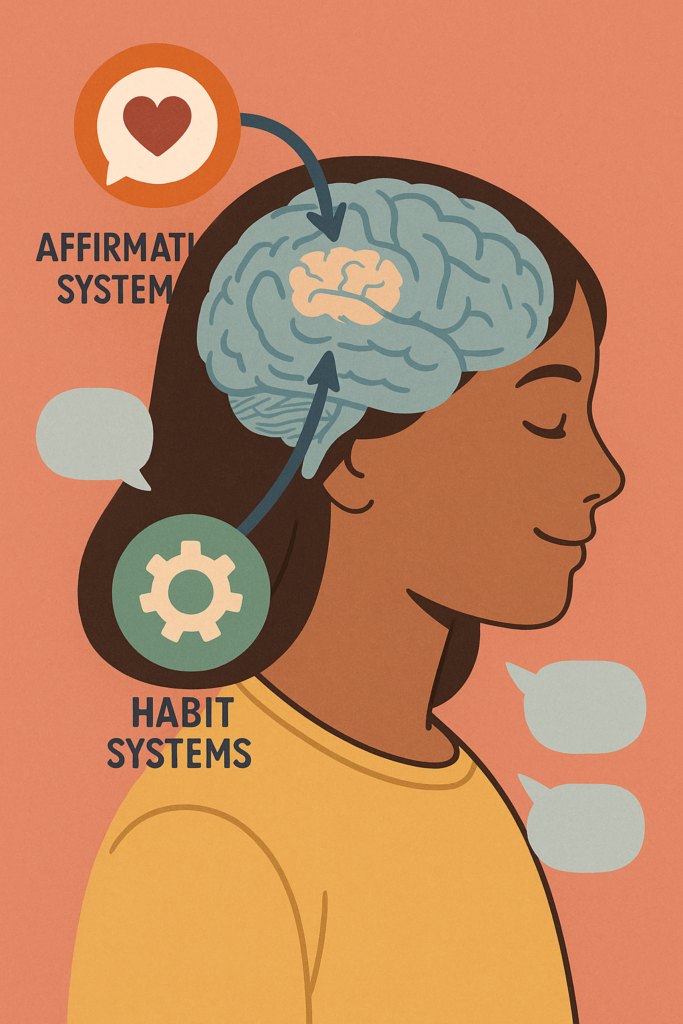
Affirmations target the brain’s reward and identity systems, which makes them especially effective for habit reinforcement and long-term behavior change. When you repeat a belief consistently, the brain begins to treat it as a reference point for future decisions, gradually aligning actions with that belief. This creates a psychological foundation that supports your daily choices instead of silently working against them. From a neuroscience perspective, affirmations activate regions of the brain involved in self-processing, motivation, and positive valuation, helping new beliefs feel familiar rather than forced.
Using affirmations for self strengthens this process by directly shaping how you view your abilities, limits, and potential. Over time, these repeated statements integrate into your self-concept, influencing what actions feel natural, achievable, or even automatic. Rather than relying on willpower alone, affirmations make habit change easier by shifting identity first. When your internal dialogue supports who you are becoming, consistent action follows more effortlessly, reinforcing both confidence and progress in a sustainable way.
Examples of Affirmations That Support Habit Formation
One of the best ways to start using affirmations to reinforce habits is by choosing statements that match the identity you want to build. For example, if you want to be someone who exercises regularly, affirmations like “I am someone who moves my body every day” or “I take care of my health consistently” can help shift your identity toward that behavior.
If productivity is your goal, you might use: “I complete important tasks even when I don’t feel like it” or “I show up for my goals with focus and clarity.” These statements address the emotional and mental blocks that often prevent people from following through.
How to Use Affirmations to Reinforce Habits (Guide)

If you’re looking for a practical way to reinforce habits through mindset, the first step is to clarify the identity you want to move toward. Habits tend to stick more effectively when they are connected to who you believe you are becoming, not just what you are trying to accomplish. Using affirmations for self allows you to anchor new behaviors to this evolving identity. Choose affirmations that describe the person you want to embody—confident, disciplined, calm, or consistent—and repeat them daily. Morning repetition, mirror work, or moments that naturally fit into your routine are especially effective because the mind is more receptive during transitions.
To strengthen the habit loop, pair your affirmations directly with the habit itself. Repeat your affirmations just before performing the habit to prime your mindset, or immediately after completing it to reinforce success. This creates a strong mental association between the behavior and the identity you are cultivating. Over time, the brain begins to link the habit with a sense of self-trust and consistency, making the behavior feel more automatic and aligned with who you are rather than something you have to force.
Practical Tips for Success Using Affirmations
If you’re searching for using affirmations to reinforce habits tips, one of the most effective strategies is repetition. The more frequently you repeat an affirmation, the more powerful it becomes. Think of it as training a muscle—each repetition strengthens your internal alignment with the habit.
Another helpful tip is to make your affirmations believable. Instead of saying something unrealistic like “I always wake up early with perfect energy,” a more grounded affirmation might be: “I’m becoming more consistent with my morning routine.” Affirmations work best when they reflect a direction of growth rather than an exaggerated ideal.
Combining Affirmations With Habit Stacking
Habit stacking is the practice of linking a new behavior with an existing routine to make the habit easier to adopt. When you combine habit stacking with affirmations, you create a powerful two-layer reinforcement system. Every time you perform your existing habit—like brushing your teeth, making coffee, or journaling—you can repeat your affirmations alongside it. This anchors the new belief into a familiar routine.
This pairing strengthens consistency and reduces the mental effort required to remember your affirmations. Over time, your mind begins to associate the routine with encouragement and positive identity—which makes using affirmations to reinforce habits even more effective.
Why Affirmations Help You Stay Consistent Long-Term

Long-term consistency is often the hardest part of habit-building, and affirmations can play a critical role in sustaining progress over time. When you repeat supportive statements daily, your inner dialogue gradually shifts toward one that reinforces discipline, focus, and self-belief. This is where using affirmations to reinforce habits becomes especially effective, because it helps reshape how you see yourself—not as someone who struggles to stay consistent, but as someone who follows through even when motivation fluctuates. This identity-based reinforcement is what keeps habits alive long after the initial excitement wears off.
Affirmations also strengthen emotional resilience, which is essential for long-term success. Instead of reacting to a missed day with guilt or self-criticism, affirmations help you pause, reset, and recommit without losing momentum. This compassionate response prevents small setbacks from turning into abandonment. Over time, these emotional shifts create a healthier relationship with habit-building itself. You’re no longer forcing behavior through pressure or perfectionism—you’re supporting change through encouragement, patience, and clarity. That mindset makes consistency feel sustainable rather than exhausting, allowing habits to grow naturally alongside confidence and self-trust.
Affirmations for Self
Affirmations for Self are powerful tools for shaping how you speak to yourself and how you experience daily life. The words you repeat internally influence your confidence, emotional balance, and decision-making. When used intentionally, affirmations help replace self-doubt with supportive inner dialogue. Rather than denying challenges, they redirect attention toward growth, capability, and self-respect, creating a mental environment that supports healthier choices and resilience.
Practicing affirmations for self works best when they feel believable and relevant to your current mindset. Simple statements repeated consistently—especially during moments of stress or transition—can gradually shift perception and behavior. Over time, these affirmations strengthen self-trust and reinforce a more compassionate relationship with yourself, making personal development feel grounded and sustainable rather than forced.
Affirmations for Kids
Affirmations for kids help build confidence, emotional awareness, and a healthy sense of self from an early age. Children naturally absorb messages from their environment, and positive affirmations give them supportive language they can use to understand themselves and the world. Simple, encouraging statements can help kids feel safe, capable, and valued, especially as they navigate new experiences, social situations, and learning challenges.
Using affirmations for kids works best when they are age-appropriate, easy to understand, and repeated in a calm, positive setting. Parents, teachers, and caregivers can model affirmations through daily routines, bedtime conversations, or moments of encouragement. Over time, these affirmations help children develop resilience, self-belief, and emotional regulation, laying a strong foundation for lifelong confidence and well-being.
A Realistic Look at Affirmations and Personal Growth
Affirmations are not magic, and they won’t replace the actual work of performing your habits. However, they act as emotional scaffolding that supports your growth and keeps you mentally aligned with your goals. This is where using affirmations to reinforce habits becomes valuable—by shaping the mindset that makes consistent action feel more natural. When used consistently, affirmations help you build an internal narrative that supports long-term progress and personal evolution.
Using affirmations to reinforce habits strengthens your identity, emotional stability, and motivation over time. These internal shifts are what make habits stick—not the words themselves, but the beliefs and self-trust they nurture. When your mindset and actions support each other, habit-building becomes less of a struggle and more of an expression of who you are becoming.
Final Reflection
The real power of affirmations lies in how they reshape your inner world. When you intentionally choose thoughts that support your goals and repeat them consistently, you begin to act in alignment with your future self. Change becomes less about forcing discipline and more about embodying a new identity that naturally supports the habits you want to build.
By using affirmations to reinforce habits regularly, you create a mental environment where good habits feel natural and sustainable. This is why so many people find long-term success when they commit to using affirmations to reinforce habits not just as a motivational tool, but as a daily practice that strengthens self-belief. With each repetition, you’re teaching your mind to trust your actions, and that trust gradually becomes the foundation of your transformation.
And once your self-belief aligns with your behavior, growth doesn’t feel like a struggle—it becomes the obvious next step in who you’re becoming.
Another powerful advantage of using affirmations to reinforce habits is the way they shape your long‑term emotional relationship with change. When you repeat supportive messages to yourself, you begin to associate growth with safety rather than pressure or fear. This shift matters because most people abandon new habits the moment they feel overwhelmed or discouraged. Affirmations create a gentler internal climate, one where progress can unfold at a steady and sustainable pace. Over time, this emotional foundation becomes just as important as the habit itself, helping you stay grounded and motivated even during challenging seasons of life.
Leave a Reply