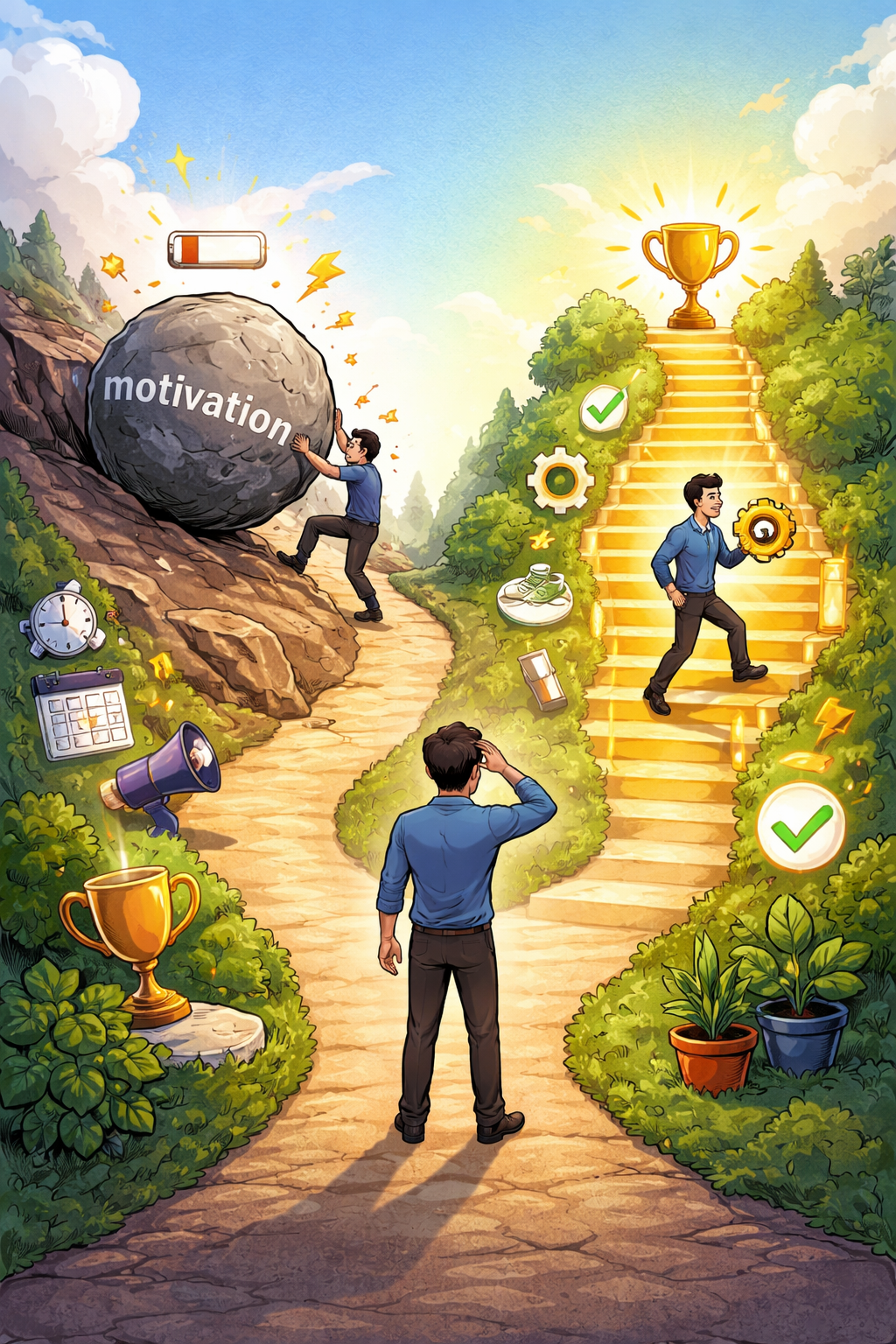
Motivation is often treated as a personal resource—something you either have or don’t—but lived experience tells a different story. People start strong, feel inspired, and then slowly watch that energy dissolve, even when the goal still matters deeply. This pattern reveals why motivation doesn’t last: it depends on emotional charge, novelty, and immediate feedback. When those elements fade, motivation follows. What’s left isn’t failure or laziness, but a system that was never designed to run on inspiration alone.
To understand this, it helps to see why motivation is a complex process, not a simple switch you can turn on at will. Motivation is shaped by mood, stress, identity, safety, and past experiences—many of which operate below conscious awareness. If you want a deeper look at how repeated behaviors gradually reshape those deeper patterns, the article The Science of Habits: How Small Daily Actions Reprogram Your Subconscious Mind explains how consistency influences the subconscious over time. When pressure rises or uncertainty appears, the brain naturally conserves energy by pulling back. This isn’t a flaw; it’s protection. Willpower fades not because you’re weak, but because your nervous system prioritizes stability over ambition.
This is where habits quietly succeed. Unlike motivation, habits don’t require emotional intensity to function. They work in the background, creating progress even when enthusiasm is absent. When habits replace pressure with familiarity, consistency stops feeling like a demand and starts feeling like support. Understanding this shift changes everything—not by teaching you how to push harder, but by showing you how to build systems that carry you forward when motivation inevitably steps aside.
Why Motivation Is a Complex Process—and Why It Abandons You When You Need It Most
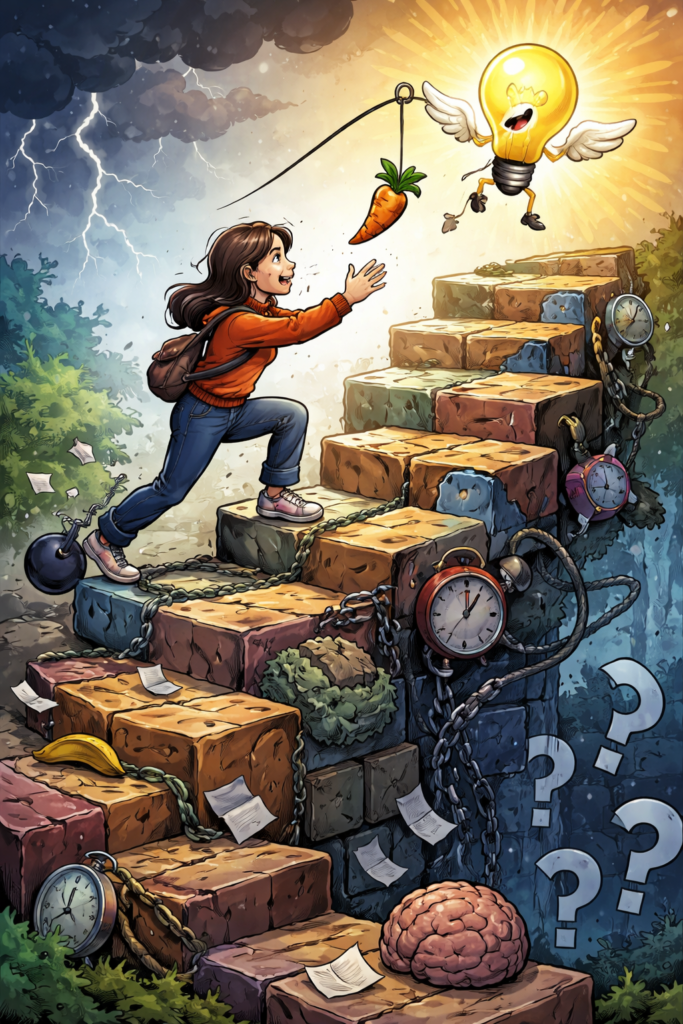
Motivation doesn’t disappear randomly—it withdraws in response to internal conditions the mind quietly monitors. Stress, uncertainty, emotional overload, and perceived risk all influence whether motivation is released or withheld. This is why motivation is a complex process: it is regulated by survival systems, not by logic or intention. When life feels unpredictable or emotionally demanding, the brain reduces drive to preserve energy and safety. Ironically, this is often the exact moment people expect motivation to rise, which makes its absence feel personal rather than biological.
Another reason why motivation doesn’t last is that it relies heavily on anticipation. Motivation is strongest when an outcome feels exciting and reachable, but as soon as effort becomes repetitive or progress slows, the emotional payoff drops. The mind then reassesses the cost and quietly disengages. This doesn’t mean the goal has lost value—it means the emotional reward loop has weakened. Without novelty or reassurance, motivation has nothing to feed on, so it retreats without warning.
What’s often misunderstood is that motivation isn’t meant to sustain long journeys—it’s meant to initiate them. Expecting it to remain present under pressure creates unnecessary self-judgment. Recognizing why motivation is a complex process allows people to stop chasing a feeling and start building support systems that don’t depend on it. When motivation fades, it isn’t a signal to quit—it’s an invitation to shift from emotional drive to structural consistency, where progress continues even in silence.
The Emotional Crash After Motivation Fades—and What Really Carries You Forward

The emotional crash that follows motivation fading often feels heavier than the loss of motivation itself. There’s confusion, self-blame, and the quiet fear that something is wrong with you for not feeling driven anymore. This moment reveals why motivation doesn’t last—because motivation runs on emotional momentum, and momentum collapses when reality becomes repetitive, uncertain, or demanding. When the excitement wears off, the nervous system recalibrates, and what once felt energizing can suddenly feel exhausting.
This crash is intensified by misunderstanding why motivation is a complex process. Motivation doesn’t simply decline; it shifts in response to internal safety cues. When effort feels too costly or progress too slow, the brain interprets continuation as risk rather than reward. The emotional low that follows isn’t failure—it’s the system asking for a different form of support. Without that understanding, people attempt to “restart” motivation, only to repeat the same cycle of rise and crash.
What truly carries you forward isn’t a return of motivation, but the presence of structure when emotion is absent. Familiar routines, low-friction habits, and gentle consistency provide stability without demanding enthusiasm. They work quietly, without asking how you feel today. In this way, progress becomes less emotional and more dependable. When motivation fades, what remains isn’t emptiness—it’s the opportunity to move forward in a way that no longer depends on feeling inspired to begin.
When Willpower Goes Silent: How Habits Step in Without Asking Permission

There is a quiet moment most people recognize but rarely name—the moment willpower simply goes silent. No resistance, no rebellion, just the absence of drive. This silence is not a flaw; it’s a natural outcome of why motivation doesn’t last. Willpower depends on conscious effort, and conscious effort is the first thing the brain conserves under fatigue, stress, or emotional load. When energy drops, the mind stops negotiating and defaults to whatever requires the least decision-making.
This is where understanding why motivation is a complex process changes the narrative. Motivation fluctuates because it’s sensitive to internal signals that operate faster than logic. Habits, on the other hand, bypass those signals entirely. They don’t wait for readiness or emotional permission; they activate through familiarity. When a behavior has been repeated enough, it no longer asks whether today feels right—it simply runs. That’s not discipline; it’s neurological efficiency quietly taking over.
In those moments when willpower is absent, habits become the invisible hand that keeps progress alive. They carry you through days that motivation would abandon, preserving momentum without demanding belief or energy. This is why habits feel almost impersonal when they work—they don’t argue, persuade, or inspire. They just continue. And in a system where motivation is unpredictable, that quiet continuation becomes the most reliable form of self-support.
The Moment Effort Becomes Exhausting—and Consistency Becomes Relief

There comes a point where trying harder no longer produces progress—it only produces fatigue. This is usually when people assume they’ve failed, when in reality they’ve reached the limit of effort-based change. Effort is expensive because it draws directly from conscious energy, which explains why motivation doesn’t last under sustained pressure. The mind can push for a while, but it cannot sprint indefinitely. When effort becomes exhausting, it’s often a signal that the system is ready for a different mode of movement.
This shift makes sense once you understand why motivation is a complex process rather than a reliable fuel source. Motivation thrives on emotion and meaning, but it weakens under repetition and uncertainty. Consistency, by contrast, reduces emotional demand. It replaces decision-making with predictability. What once required constant self-encouragement becomes automatic, and the absence of inner debate feels like relief. In this phase, consistency stops feeling rigid and starts feeling supportive—like something carrying you rather than something you have to carry.
Relief emerges not from doing more, but from doing less with greater regularity. When consistency takes over, progress becomes quieter but steadier. There’s no surge of inspiration, no dramatic push—just forward motion that doesn’t drain you. This is the moment many people overlook, mistaking calm for complacency. In truth, it’s the moment change becomes sustainable, because it no longer depends on how motivated you feel—it depends on what you’ve already built.
How Habits Succeed Not Through Strength, but Through Emotional Safety
Habits succeed when they feel safe enough to repeat, not when they demand strength to endure. Strength relies on pushing through discomfort, which is precisely why motivation doesn’t last under prolonged effort. The nervous system resists what feels emotionally costly, even if the goal is meaningful. Habits that survive are the ones that lower the internal stakes—no pressure to feel inspired, no demand for intensity, no threat of failure if a day goes imperfectly. When a behavior feels non-threatening, the system allows it to continue without resistance.
This works because why motivation is a complex process lies in how deeply it’s tied to emotion and self-protection. Motivation spikes when things feel exciting and safe, then withdraws when pressure or uncertainty rises. Habits that prioritize emotional safety bypass this cycle by becoming familiar instead of forceful. They don’t ask for belief or energy; they offer predictability. Over time, that predictability becomes trust—and trust is what allows habits to outlast motivation, not by pushing harder, but by making consistency feel like the most natural option available.
Conclusion
Motivation doesn’t last because it was never designed to carry long-term change on its own. It rises through emotion, anticipation, and meaning, then fades as effort becomes repetitive and reality introduces friction. This pattern reveals why motivation is a complex process—it responds to internal safety, energy, and emotional signals rather than intention alone. When motivation drops, people experience an emotional crash, misinterpret silence as failure, and exhaust themselves trying to restart what was never meant to stay constant. Willpower goes quiet not because something is wrong, but because the system is conserving itself.
Habits succeed precisely where motivation fails. They step in without permission, remove emotional negotiation, and continue when effort becomes exhausting. This is why motivation doesn’t last, and why consistency—when built gently—feels like relief rather than pressure. Habits work not through strength, but through emotional safety: familiarity replaces force, structure replaces inspiration, and progress continues without requiring belief or energy. When habits are allowed to carry the weight motivation cannot, change becomes quieter, steadier, and far more sustainable.
Leave a Reply