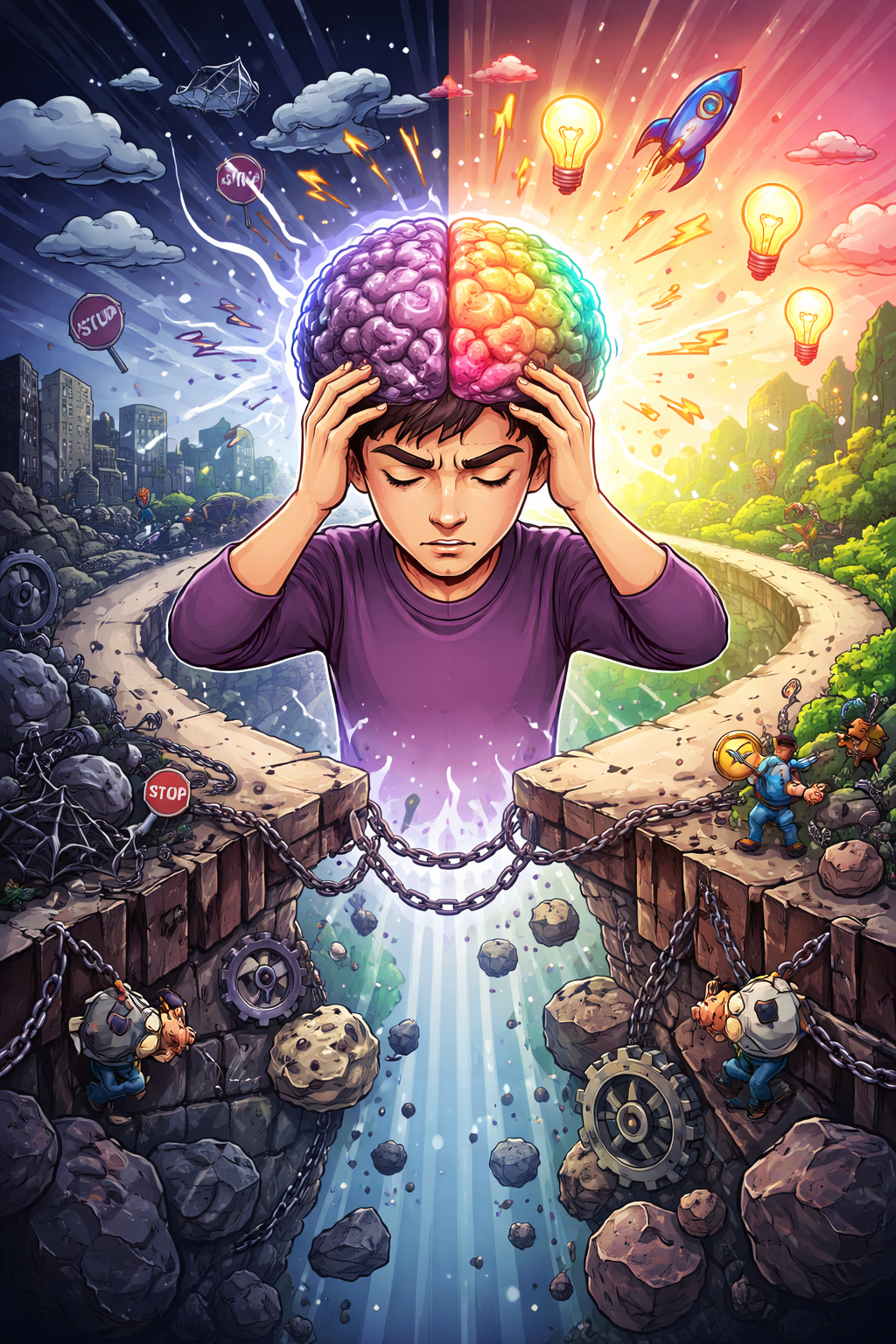
At the beginning of real change, the most surprising feeling is not excitement—it’s resistance. Many people expect transformation to feel empowering right away, but instead they experience hesitation, doubt, or even internal tension. This is often why thinking differently feels unnatural at first. Your mind has spent years reinforcing familiar patterns, so when you introduce a new perspective, it creates friction. Understanding the psychology of changing your mindset reveals that discomfort is not a sign of failure; it’s a natural part of rewiring the way your brain interprets the world.
Another reason why new ways of thinking feel uncomfortable is that your brain prioritizes familiarity over improvement. Even when a new belief is healthier or more empowering, it still challenges the mental shortcuts you’ve relied on for years. This explains why changing your thinking is hard—not because you lack discipline, but because your brain is protecting the stability of its existing patterns. As explored further in How Belief Systems Affect Manifestation, the beliefs you repeat internally shape how you interpret opportunities, setbacks, and possibilities in your life.
The key question then becomes how to train your brain to think differently without fighting yourself. The answer lies in repetition and emotional reinforcement. New thoughts must be practiced consistently until they feel normal rather than forced. Over time, what once felt unnatural becomes familiar, and the friction fades. The moment you stop expecting instant comfort is the moment your growth truly begins.
Why Thinking Differently Feels Unnatural: The Mental Resistance That Appears When Your Identity Begins to Shift

One of the most overlooked reasons why thinking differently feels unnatural is that new thoughts don’t just challenge ideas—they challenge identity. When you begin to question beliefs you’ve carried for years, your mind interprets the shift as instability. This reaction is rooted in the psychology of changing your mindset, where the brain tries to preserve the version of yourself it recognizes. Even if the new perspective is healthier, the mind still resists it because identity prefers familiarity over improvement.
This is also why new ways of thinking feel uncomfortable at the beginning. You may intellectually understand a new concept, yet emotionally feel misaligned with it. That tension explains why changing your thinking is hard. Your brain must reconcile the gap between the person you’ve been and the person you’re becoming. During this stage, doubt and hesitation often appear—not because the new belief is wrong, but because your identity is adjusting to unfamiliar territory.
The way forward is not to force certainty, but to build familiarity through experience. Learning how to train your brain to think differently starts with practicing new interpretations in everyday situations. When a challenge appears, pause and choose a response aligned with the mindset you want to develop. Repetition slowly reduces resistance. Over time, the perspective that once felt unnatural begins to feel authentic, and the identity that resisted change becomes the identity that supports it.
The Brain’s Preference for Familiar Patterns: Why Growth Initially Feels Wrong Instead of Right

The human brain is designed to conserve energy, and one of the ways it does this is by repeating familiar patterns. Thoughts, reactions, and interpretations that you’ve practiced for years become automatic pathways. That’s why thinking differently feels unnatural at the beginning of personal change. Even when a new perspective is healthier or more empowering, it disrupts the mental shortcuts your brain has relied on. The unfamiliar doesn’t immediately register as improvement—it often registers as uncertainty.
This explains why new ways of thinking feel uncomfortable even when you consciously want to grow. According to the psychology of changing your mindset, the brain values predictability because it signals safety. When a new idea challenges your usual beliefs, your mind may respond with hesitation or skepticism. That internal friction is also why changing your thinking is hard. Your brain is not resisting growth intentionally; it is simply trying to maintain stability while it evaluates whether the new perspective can be trusted.
The key to overcoming this resistance is repetition. Learning how to train your brain to think differently requires practicing the new perspective until it becomes familiar. This might mean reframing challenges as opportunities, questioning automatic assumptions, or choosing curiosity instead of judgment. At first, these shifts may feel forced, but consistency slowly reshapes your mental pathways. Over time, what once felt wrong begins to feel natural—and the growth that once felt uncomfortable becomes part of who you are.
From Mental Friction to Mental Freedom: How New Thinking Slowly Becomes Your New Normal

At the beginning of personal change, the mind often feels like it’s working against you. New perspectives don’t immediately bring relief—they create tension. This is why thinking differently feels unnatural in the early stages of growth. Your brain is comparing unfamiliar thoughts with long-established mental habits, and the contrast produces friction. Within the psychology of changing your mindset, this friction is expected. It signals that your brain is evaluating a new pattern that hasn’t yet earned the comfort of familiarity.
During this transition, it’s common to question yourself. You may wonder why new ways of thinking feel uncomfortable even when they align with your goals. The reason is that old beliefs were reinforced through years of repetition, emotion, and experience. This is also why changing your thinking is hard—the brain must slowly replace deeply practiced patterns with new ones. Until the new perspective is repeated enough times, it will always feel slightly unnatural.
The path from friction to freedom comes through deliberate repetition. Learning how to train your brain to think differently means practicing new interpretations consistently, especially in moments when your old reactions would normally take over. Instead of fighting the discomfort, treat it as evidence that your thinking is expanding. Over time, the same thoughts that once felt forced begin to feel intuitive. The mental effort fades, and what once required conscious practice becomes your new normal.
The Adaptation Phase: Why Your Mind Needs Time to Trust a New Perspective

When you begin adopting a new perspective, there is often a period where your mind hesitates before fully accepting it. This stage is known as the adaptation phase—a mental transition where your brain gradually learns to trust a different way of interpreting reality. Many people wonder why thinking differently feels unnatural during this time, especially when they genuinely want to change. The answer lies in the brain’s preference for familiarity. According to the psychology of changing your mindset, the mind tends to hold onto established patterns because they feel predictable and safe.
This is also why new ways of thinking feel uncomfortable at first. Your brain is essentially testing a new mental framework, comparing it against years of learned beliefs and reactions. Until the new perspective proves consistent and reliable, the mind may treat it with skepticism. That uncertainty explains why changing your thinking is hard even when the new belief is healthier or more empowering. The brain isn’t rejecting growth; it’s simply waiting for repeated experiences that confirm the new way of thinking is safe and beneficial.
The key to navigating this phase is patience and repetition. Learning how to train your brain to think differently means practicing the new perspective in everyday situations, not just during moments of reflection. For example, when an old reaction appears, pause and consciously choose the response that aligns with the mindset you want to develop. Each time you do this, you strengthen the new mental pathway. Over time, what once felt unfamiliar begins to feel natural, and the perspective your mind once questioned becomes one it confidently trusts.
When Discomfort Means Progress: The Hidden Signs Your Thinking Is Expanding
Growth rarely announces itself with certainty. More often, it arrives disguised as confusion, hesitation, or a strange sense of internal tension. When your thinking begins to expand, your mind temporarily loses the comfort of its old mental shortcuts. This can feel unsettling, but that discomfort is often evidence that your perspective is stretching beyond familiar limits. Instead of interpreting these moments as signs that something is wrong, consider the possibility that your mind is simply adjusting to a wider view of the world.
One subtle indicator of this expansion is when your reactions begin to slow down. Situations that once triggered instant judgment or emotion may now cause you to pause and reconsider. That pause is powerful. It means your brain is no longer operating purely on old patterns but is creating space for reflection and new interpretations. This shift may feel awkward at first, but it signals that your thinking is becoming more flexible, more intentional, and less controlled by automatic habits.
You can support this transformation by treating discomfort as a signal to explore rather than retreat. When a new idea or perspective challenges you, ask yourself what it might be trying to teach you instead of dismissing it immediately. Growth happens when curiosity replaces defensiveness. Over time, these moments of mental stretching strengthen your ability to see beyond old assumptions, turning temporary discomfort into the foundation of deeper understanding and lasting personal evolution.
Conclusion
Changing the way you think is rarely a sudden transformation. As explored throughout this article, the mind naturally creates resistance when new perspectives begin to challenge familiar beliefs. When your identity starts to shift, mental resistance can appear because your brain is trying to protect patterns it has relied on for years. This is why growth can initially feel confusing or uncomfortable. The brain prefers familiar interpretations of reality, and when those patterns are disrupted, it takes time for a new way of thinking to feel stable and trustworthy.
Yet this psychological friction is not a sign that something is going wrong—it is evidence that real change is taking place. As your mind gradually adapts, the discomfort begins to fade, replaced by clarity and confidence in your new perspective. Through repetition, reflection, and patience, unfamiliar thoughts slowly become natural responses. What once felt awkward eventually becomes intuitive, and the thinking patterns that once defined you begin to evolve into something stronger, more flexible, and more aligned with the person you are becoming.
Leave a Reply